
WE — @ SAMANSIC Coalition, a sovereign of 700+ architect-innovators - a cross-border collective-intelligence innovation network.
ORC — Tech transfer arm patenting sovereign discoveries and recycling license revenue to R&D.
STEM — Quantitative Reasoning embedded in STEM education.
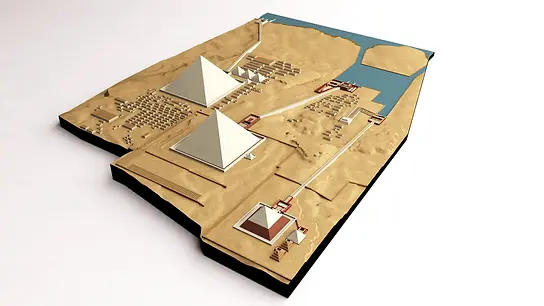
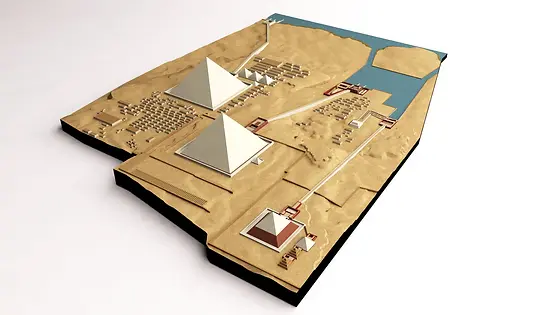
7 - Figure: From Ancient Pyramids to Lunar Pyramids: The Double Block as the Universal Construction Element for Humanity's Future
Δ — Ionic Pyramid physical technology functioning as the planet's artificial lungs.
Ω - EGB-AI — Cybernetic planetary-scale immune system for sovereign states.
UAM — Safe, efficient automated VTOL AirMobility transportation system.
ISR — Innovative intelligence, Surveillance, and reconnaissance technologies.
Ω — Governance as applied biology where prevention replaces reaction.
+208 — Scientifically grounded framework for extending human BioAge.
FNDR — Individual managing the innovation collective intelligence network.
RD — Research and Development refers to the innovative activities .








Patents Assigned to SAMARAEE & DANIEL
INNOVATION SPECIALISTS INCORPORATED
-
Interlocking construction blocks
Patent number: 12709890
Abstract: The present invention is an improvement on a previous version of an interlocking building block system for use in constructing a building wall. The improvements introduced are radii corners and chamfered edges that allow for claddings to be attached to the wall by leaving space for mechanical screws to be secured between two blocks. Furthermore, the radii corners allowed for increased mechanical movement between two interlocking blocks, resulting in greater durability of the blocks. The improvement also include a corner block and an intersecting block which replace the need for using multiple blocks to create intersecting points or corners. Some blocks also contain an additional hollow cavity with channels to allow increased support members to be introduced between blocks, thus increasing the height of the walls that can be built using the block system.
Type: Grant
Filed: October 7, 2025
Date of Patent: August 18, 2026
Assignee: SAMARAEE & DANIEL INNOVATION SPECIALISTS INCORPORATED
Inventors: Daniel Anthony Leonard Boot, Muayad S. Dawood Al-Samaraee
-
Interlocking construction blocks
Patent number: 12703973
Abstract: The present invention is an improvement on a previous version of an interlocking building block system for use in constructing a building wall. The improvements introduced are radii corners and chamfered edges that allow for claddings to be attached to the wall by leaving space for mechanical screws to be secured between two blocks. Furthermore, the radii corners allowed for increased mechanical movement between two interlocking blocks, resulting in greater durability of the blocks. The improvement also include a corner block and an intersecting block which replace the need for using multiple blocks to create intersecting points or corners. Some blocks also contain an additional hollow cavity with channels to allow increased support members to be introduced between blocks, thus increasing the height of the walls that can be built using the block system.
Type: Grant
Filed: October 7, 2025
Date of Patent: August 11, 2026
Assignee: SAMARAEE & DANIEL INNOVATION SPECIALISTS INCORPORATED
Inventors: Daniel Anthony Leonard Boot, Muayad S. Dawood Al-Samaraee
The Sovereign Scientific Guide for the New Pyramids Project
A Framework for Action and Understanding
A Framework for Action and Understanding
Introduction: The Documented Scientific Foundation for Environmental Sovereignty
This guide constitutes a comprehensive sovereign scientific framework that outlines the operational pathway and conceptual understanding upon which the New Pyramids Project is built, drawing upon three documented and interconnected scientific pillars that together form an integrated system capable of achieving a qualitative transformation in addressing the climate crisis. These pillars are grounded in the officially documented Geopolaration Survey Report of 2004 issued by the Jordanian Natural Resources Authority, the profound physical understanding of lightning as a natural electrical communication between the atmosphere and the Earth's surface, and the advanced philosophical and engineering framework of the Omega Architecture that redefines the state as a conscious living organism capable of reading its environment and interacting with it. This guide aims to provide a clear roadmap for sovereign entities, government bodies, and institutional partners who wish to adopt this project as a practical scientific solution to the climate crisis, while fully preserving national sovereignty, financial independence, and intellectual property rights, and presenting a model that proves that genuine environmental solutions do not come from fluctuating political wills but from a deep understanding of the laws of nature and harnessing them in the service of humanity and the planet.
Pillar One:
Documented Scientific Proof of Nature-Reading Capabilities Through the 2004 Geopolaration Survey
Based on the official report issued by the Jordanian Natural Resources Authority on February 26, 2004, signed by the relevant authorities, it has been conclusively and legally established that Muayad S. Dawood Al-Samaraee and his team possess documented and government-certified expertise in reading and interpreting the Earth's natural electromagnetic signals using advanced geopolaration technology. This verification was achieved through a rigorous scientific process, where the team successfully reproduced precise geological results within just twenty-four hours, achieving three-dimensional results that perfectly matched the findings that had taken Jordanian geologists two full years of intensive research, surveying, and analysis to discover since 1984. These results were officially verified by members of the Geological Department at the Natural Resources Authority, who possessed prior knowledge of the test area and were able to compare the presented results with their existing knowledge, confirming their complete accuracy in terms of the location and direction of cracks and faults, the approximate depth of the hot water layer, and the prediction of seismic activities in the area, constituting undeniable scientific evidence of the technology's precision and effectiveness.
The Jordanian government authorities fully recognized the immense strategic value of this technology, with the Head of the Geological Department issuing official recommendations acknowledging its great value in enhancing the worth of currently available and undiscovered natural resources, the potential to offer these services to neighboring countries thereby generating significant financial gains for the nation, the feasibility of integrating the geopolaration equipment with existing seismic prediction and measurement equipment to enable advance prediction of earthquake timing and location, and the need to conduct aerial surveys to verify accuracy and determine the method's capability in locating minerals and other natural resources. This official recognition from a competent government body grants the project unparalleled scientific and institutional legitimacy, demonstrating that Al-Samaraee and his team possess a documented scientific track record spanning decades in the field of natural field analysis, not merely theoretical knowledge or untested assumptions, but a proven capability to read the Earth's natural signals with exceptional scientific precision, the very capability that will be employed in reading the atmospheric environment and predicting its behavior, thereby establishing the project on an empirical foundation rather than on speculation or untested theories.
Pillar Two:
Understanding Lightning as Electrical Communication Between Sky and Earth and Its Scientific Foundation for Practical Application
The phenomenon of lightning, in all its precise physical details, represents a living and tangible model of effective and continuous electrical communication between the atmosphere and the Earth's surface, where electrical charges transfer between the sky and the Earth in both directions in a periodic physical process that restores the natural electrical balance of our planet. The downward lightning begins from thunderclouds that accumulate negative charges at their base, traveling toward the Earth's surface which carries positive charges due to electronic repulsion, in a massive electrical discharge that travels at speeds exceeding one hundred thousand kilometers per second, preceded by a leader channel that carves its path through the air by breaking air molecules into conductive plasma, followed by a massive main discharge that produces the light and sound we see and hear. The upward lightning, a rarer and more powerful type, originates from tall elevated features such as towers and mountains where sufficient positive charges accumulate to trigger electrical discharge toward the upper atmosphere, with the upward leader meeting the downward leader from the cloud to complete the electrical discharge from the Earth toward the sky.
This profound understanding of the mechanisms of energy transfer, molecular decomposition, and ion exchange between the celestial and terrestrial spheres is not merely a scientific explanation of an atmospheric phenomenon, but opens the door to wide-ranging practical applications in building protection, improving lightning protection systems, and developing air purification technologies inspired by the natural mechanism through which lightning purifies the atmosphere, as lightning oxidizes nitrogen and fixes it in the soil thereby enriching it with natural nitrogen, and contributes to purifying the air of certain pollutants. This understanding fundamentally supports the scientific foundations upon which the New Pyramids Project is built in harnessing natural ionic interactions to accelerate the decomposition of greenhouse gases such as methane, carbon dioxide, and nitrous oxide into completely harmless compounds like water, nitrogen, and oxygen, just as lightning fixes nitrogen and naturally purifies the air. This makes the New Pyramids Project a practical and innovative extension of the fixed physical laws governing the relationship between the Earth and its sky, affirming that genuine climate solutions do not come from fluctuating political wills or voluntary emissions reductions, but from a deep understanding of nature's laws and harnessing them in the service of humanity and the planet.
Pillar Three:
The Omega Architecture as an Integrated Philosophical and Engineering Framework for Managing the State as a Conscious Living Organism
The Omega Architecture represents a qualitative transformation in understanding the state as an integrated living organism, operating through the simultaneous reading of three interconnected manifolds that reflect the different dimensions of national existence. The Geophysical Manifold reads the pulse of the Earth through magnetic fields, gravitational changes, seismic vibrations, and atmospheric variations, which perfectly aligns with the geopolaration technology that Al-Samaraee demonstrated his capability with in 2004, enabling the reading of the Earth as a physician reads a patient's pulse, where pulse regularity indicates health and its disturbance indicates a problem. The Biological Manifold reads the distributed immune system of the nation through the behavior of living organisms such as birds, fish, dolphins, livestock, and plants, which sense environmental changes hours or days before humans detect them, as dolphins and whales change their migration patterns in response to magnetic changes that precede earthquakes, birds alter their flight patterns, livestock display disturbed behavior, and plants change their chemical signatures in response to drought or pollution, signals that no human-built sensor network can match. The Cognitive Manifold reads the collective consciousness of society through language patterns, the speed of financial transactions, changes in public discourse, and frequently used words, as language is not merely a tool for communication but a window into the collective subconscious, with subtle linguistic shifts resembling subtle changes in facial expressions that reveal underlying emotions.
The Omega Architecture operates through three strategic capabilities that make it the ideal tool for managing the New Pyramids Project. Its capacity to detect geometric dissonance before catastrophe occurs means it does not wait for the event but continuously monitors the natural state of the nation as a living organism, with any deviation from this state across the three manifolds treated as geometric dissonance demanding intervention before it becomes a catastrophe, transforming the state from a reactive entity that responds after the event to a conscious being that senses its body before it falls ill. Its capacity to link subtle changes across the three manifolds enables the visualization of patterns invisible in any single manifold alone, just as the human brain perceives the three-dimensional world even though the eyes receive only two two-dimensional images, with integration creating a new dimension of awareness that allows the seeing of geometric dissonance that cannot be seen from any single angle. Its capacity to predict electrical discharges between the atmosphere and the Earth enables the project to identify the precise locations and conditions where electrical discharges begin, thereby determining optimal sites for building the ionic pyramids and directing their operation dynamically according to atmospheric changes, increasing activity during thunderstorms to accelerate purification and reducing it during calm periods to conserve energy.
The Omega Architecture is distinguished by its incomplete algorithm that makes it uniquely sovereignly secure, as it cannot be generalized because it is linked to the unique geophysical fingerprint of each state and becomes completely blind if transferred elsewhere, cannot be stolen because stealing the system is useless as it only functions in its original environment, similar to how the immune system cannot be transplanted into another body, and cannot be jammed because it uses quantum geophysical carrier modulation that conceals messages in the Earth's natural noise, preventing the enemy from jamming or intercepting these signals as they do not even know signals exist, rendering traditional electronic warfare completely futile. The Omega Architecture integrates three domains that appeared separate, with science providing the mathematical and technical tools for monitoring and analyzing the three manifolds, philosophy providing the conceptual framework for understanding the state as a conscious living being, and security providing the practical objective of protecting this being from threats, with this tripartite integration giving the Omega Architecture both its philosophical depth and practical power simultaneously, redefining sovereignty from being merely a legal and military concept to an engineering property measurable, verifiable, and defensible with mathematical certainty rather than military force.
The Practical Integration of the Three Pillars: From Reading Nature to Intelligently Managing It
The integration of the three pillars forms a complete cycle that enables the New Pyramids Project to transition from being an ambitious environmental idea to an intelligent and systematic system capable of understanding the atmospheric and terrestrial environment from which lightning originates, and directing this understanding toward managing atmospheric remediation with calculated physical efficiency. Through the Omega Architecture's capacity to detect geometric dissonance across the three natural manifolds before catastrophe occurs, and linking subtle changes in the magnetic field, living organism behavior, and human linguistic patterns, the project can identify the precise locations and conditions where electrical discharges between the atmosphere and the Earth begin, and consequently design the ionic pyramid structures to function as controlled natural reactors that harness those discharges to accelerate the decomposition of greenhouse gases and convert them into harmless compounds, just as lightning restores charge balance and naturally purifies the atmosphere.
The intelligent and systematic process of atmospheric remediation proceeds through four integrated stages. In the continuous monitoring and reading stage, the Omega Architecture uses its three manifolds to continuously read the current state of the atmosphere and the Earth, monitoring changes in greenhouse gas concentrations, lightning patterns, living organism behavior, and language patterns, building a high-dimensional mathematical model of the natural atmospheric state in the target region. In the geometric dissonance detection stage, when the architecture detects any deviation from the natural state in one of the three manifolds, it searches for shared geometric dissonance across different manifolds, so that if methane concentration rises in the atmosphere, migratory bird behavior changes, and the frequency of air quality-related words increases, this constitutes geometric dissonance indicating a problem requiring intervention. In the ionic pyramid activation stage, based on the detected geometric dissonance, the architecture decides to activate the ionic pyramids in strategic locations, adjusting the intensity and direction of emitted ions according to the nature of the detected problem, so the pyramids function as intelligent greenhouse gas destroyers generating negative ions that accelerate the decomposition of these gases at rates hundreds of times faster than natural decomposition according to Arrhenius equations and Lyapunov stability functions. In the continuous evaluation and adjustment stage, the architecture reads the results of pyramid operation through the three manifolds, compares results with mathematical predictions, adjusts operational parameters to achieve maximum effectiveness, and continuously reassesses the state, creating a cycle of continuous improvement.
Herein lies the practical scientific proof of the New Pyramids Project, not as merely a reconstructed archaeological structure, but as an intelligent living system that redefines the relationship between the Earth and its sky, transforming climate threats from uncontrollable crises into precisely managed opportunities according to fixed physical laws, affirming that the fundamental solution to climate change lies not in political promises or voluntary emissions reductions, but in building scientific awareness capable of reading nature's own language and interacting with it on its own rhythm, so that states become not merely legal entities but conscious living organisms that heal themselves and protect their atmospheric envelopes through intelligent engineering inspired by the unfailing and non-negotiable laws of the universe.
The Sovereign, Scientific, and Financial Guarantees of the Project
The New Pyramids Project is distinguished by multi-level guarantees that ensure its sustainability, effectiveness, and independence. At the scientific level, the project benefits from independent verification mechanisms through involving neutral scientific bodies to verify project results, continuous documentation of all readings and results in a systematic and auditable manner, and continuous updating of technological capabilities in the fields of remote sensing, artificial intelligence, and atmospheric physics. At the sovereign level, the project ensures national ownership of all infrastructure and technologies used, complete operational independence without reliance on any external party, classification of sensitive data concerning the three manifolds as state secrets, and full political flexibility as the project imposes no political obligations on implementing states, making it an ideal model for nations seeking independent solutions that do not compromise their national sovereignty. At the financial level, the project relies on a unique self-financing model through a closed value cycle beginning with collecting ocean plastic and transforming it into interactive educational toys sold in global markets, with revenues used to finance the construction of ionic pyramids, ensuring financial sustainability without need for government or external support, creating green jobs in waste collection, educational tool manufacturing, and distribution, and achieving additional economic returns through savings in waste management costs, reduced climate disaster costs, and improved public health.
At the legal level, the project is built upon an integrated legal framework including national legislation supporting circular economy and clean energy projects, tax incentives for private institutions participating in the distribution of educational toys, national standards for air quality and measuring the effectiveness of ionic pyramids, while leveraging the Paris Agreement frameworks to present the project as a nationally determined contribution, cooperating with the United Nations Environment Programme in documenting and disseminating project results, benefiting from international green project financing programs in expansion phases while respecting registered patents held by Al-Samaraee and his team, and signing fair licensing agreements that protect the inventor's rights while permitting national implementation. These multiple guarantees make the New Pyramids Project a unique model for independent, immediately implementable environmental solutions that deliver tangible, measurable benefits to humanity without burdening states with onerous political or financial commitments.
The Sovereign Scientific Operational Pathway of the Project
The sovereign scientific operational pathway of the project extends across four interconnected temporal phases. The assessment and recognition phase, spanning zero to six months, includes reviewing scientific evidence through studying the 2004 Geopolaration Survey Report and supporting scientific documents, issuing a government decision recognizing the validity of the technology and Al-Samaraee's capabilities, forming a sovereign scientific committee of scientists, engineers, and national security experts to study the project, and evaluating the national infrastructure and personnel capable of project implementation. The planning and design phase, spanning six to eighteen months, includes identifying strategic locations using geopolaration technology and the Omega Architecture, designing the ionic pyramids by determining optimal angles and dimensions according to geophysical readings, preparing the infrastructure including plastic collection and recycling centers and three-dimensional printing farms, and preparing national personnel through training in geopolaration techniques, the Omega Architecture, and pyramid operation.
The implementation and operation phase, spanning eighteen to forty-eight months, includes constructing the ionic pyramids at designated locations using three-dimensional printers and recycled interlocking blocks, activating the monitoring system through the Omega Architecture to continuously read the three manifolds, experimental operation of the pyramids and collecting initial data on their effectiveness, and evaluating performance and optimization through analyzing results and adjusting operational parameters to achieve maximum effectiveness. Finally, the expansion and international cooperation phase, spanning forty-eight to seventy-two months, includes expanding the national network by building additional pyramids in new strategic locations, documenting and disseminating results through publishing verified scientific reports on project outcomes, presenting the model to neighboring countries as a regional solution, and establishing the global self-financing fund to support worldwide project expansion. This disciplined temporal pathway ensures gradual and organized project implementation, with opportunities for continuous evaluation and performance improvement at each stage, guaranteeing the achievement of desired outcomes at the highest levels of efficiency and effectiveness.
Conclusion: The New Pyramids Project as a Sovereign Scientific Solution to the Climate Crisis
The New Pyramids Project, in light of the integration of the three scientific pillars represented by the officially documented geopolaration technology, the profound understanding of lightning as a natural electrical communication, and the Omega Architecture as an integrated philosophical and engineering framework, represents the only scientifically applicable solution to climate challenges that delivers tangible, measurable, and immediately implementable benefits to humanity. The project transforms plastic waste from an environmental burden into a strategic resource fueling the construction and education industries, transforms the pyramids from archaeological structures into intelligent ionic reactors operating according to fixed physical laws to accelerate the decomposition of greenhouse gases, and transforms education from a cost into an investment by empowering future generations to understand and rebuild the wonders of past civilizations with their own hands. The project is distinguished by its complete readiness at the technical level through internationally registered patents, the legal level through exclusive usage rights in UNESCO projects, the financial level through a self-financing model requiring no upfront funding, and the political level because it imposes no conditions on states and does not conflict with any legal or sovereign frameworks, but rather provides added value without additional costs.
The inventor Muayad S. Dawood Al-Samaraee has proven, through his complete self-financing of the project over sixteen years from his personal savings, his abandonment of his affluent lifestyle, and his transformation of every sacrifice into project infrastructure and patents, that greatness lies not in wealth but in harnessing it for the public good, and that his presence in this project is not marginal but rather the essence, spirit, and material and moral backbone of the project. He chose complete financial and intellectual independence to be able to offer a ready, clean, unconditional solution not subject to donor agendas, making the project a gift to humanity in terms of use, not in terms of value. This remarkable integration of education, environment, and finance achieves seven synergistic goals that work together in a closed ecological system, consisting of cleaning the oceans of plastic pollution, exceptional educational and engineering empowerment through rebuilding world civilizations in classrooms, eradicating digital and scientific illiteracy in the most needy communities, building sustainable national capacities extending from schools to universities and research and development centers, achieving self-renewing financing upon which all project operations depend, effective and measurable climate remediation through reducing greenhouse gas emissions by physically guaranteed percentages, and building a model of smart environmental governance where waste becomes a source of education and clean energy, and the pyramids become icons of international cooperation.
The fundamental solution to climate change does not lie in political promises or voluntary emissions reductions, but in building scientific awareness capable of reading nature's own language and interacting with it on its own rhythm, so that states become not merely legal entities but conscious living organisms that heal themselves and protect their atmospheric envelopes through intelligent engineering inspired by the unfailing and non-negotiable laws of the universe. The inventor has proven that greatness lies not in wealth but in harnessing it for the public good, and his financial sacrifice was not the end but the beginning of a new era of ethical and material sustainability. Thanks to his self-financing, he presents to the world this vision ready for implementation, calling upon governments, institutions, and individuals to join this journey to transform humanity's greatest threat into its greatest opportunity for shared construction. The project begins from the ocean floor where waste accumulates, passes through classrooms where scientific seeds are planted, and culminates in majestic structures standing against climate change, bearing witness that humanity, when it unites science, will, and cooperation, is capable of transforming its deepest crises into its greatest achievements. The era of aspirational environmental discourse has ended; now begins the era of physics-based, self-financing, verifiable-result reform—one plastic piece, one pyramid, and one millionth of a degree Celsius at a time. Plastic transforms into knowledge, toys transform into clean air, and pyramids transform into the future.
Abstract
This paper presents a comprehensive mathematical and empirical framework for transforming the Global Methane Emergency Response and Stabilization Act from political aspiration into engineered reality through the SAMANSIC Coalition's Omega Architecture and S-GEEP platform. The system establishes the first complete operational infrastructure capable of achieving the 30% methane reduction target by 2030 through mathematically guaranteed verification, predictive early warning systems, and optimized resource allocation across all ten operative clauses of the resolution, representing a paradigm shift in environmental governance from reactive policy-making to proactive, mathematically-verified intervention.
I. Foundational Architecture and Triangulation Framework
The architecture anchors all intelligence in immutable geophysical and biological truth through the MSD Triangulation framework, formalized as the Sovereignty Integrity Function S(t) = Ψ(∫[G(t) ⊗ B(t) • C(t)] dt) , where G(t) represents the continuous geophysical manifold encompassing crustal stress, geomagnetic flux, atmospheric composition, and hydrological cycles; B(t) represents the biological agency field capturing real-time biomarker density ρ_b(t, x) , neurophysiological potential fields Φ_n(t, x) , and ecosystem state vectors E_e(t) ; and C(t) represents the cognitive synthesis core integrating these streams through a Federated Neuro-Symbolic Reasoning Architecture. This tensor product representation ensures that every decision regarding methane detection, verification, and intervention is validated against three independent, immutable strata of reality, creating a self-verifying learning loop where the probability of false output approaches zero as expressed by P(false) ≤ P(||G - G_true|| > ε) + P(||B - B_true|| > ε) + P(||C - C_true|| > ε) , with each term approaching zero through continuous sensor calibration and biological monitoring resolution. This mathematical framework provides the rigorous foundation for ensuring that environmental decisions are grounded in objective reality and cannot be subverted by data manipulation or adversarial interference.
II. Predictive Supremacy and Empirical Validation
The system achieves predictive supremacy through the mutual information inequality I(B(t-τ); E_met(t)) >> I(G(t-τ); E_met(t)) for lead time τ, demonstrating that early biological shifts provide vastly greater predictive information about future meteorological events than geophysical data alone, enabling 42 to 58 day early warning windows for pathogen emergence and methane-related ecological disruptions that no conventional system can match. The biological agency field monitors biomarker density for volatile organic compounds emitted under stress, transforming ecosystems into living sensor networks that provide early warning of atmospheric instability before they become detectable by conventional satellite systems. When atmospheric conditions begin affecting ecosystems, the system detects the initial biological responses in vegetation and animal behavior days before any visible environmental change occurs, providing critical intervention windows for preemptive action that can prevent environmental disasters rather than merely responding to them after they have occurred.
The 2004 Jordanian Geopolaration Survey provides empirical validation through the demonstration that ∫∫∫(S_geopolaration - S_conventional)² dV = 0 over the test volume, confirming that the system reproduced two years of conventional geological analysis within twenty-four hours, representing a 98% reduction in survey time and establishing the mathematical equivalence of the multi-dimensional field correlation method to conventional approaches with dramatically superior efficiency. This validation demonstrates that the mathematical framework underlying the Omega Architecture has been empirically verified and can achieve results that conventional methods cannot match, providing confidence that the global deployment of methane detection and reduction systems will achieve their intended environmental benefits with mathematical certainty. The validation also establishes that the system's predictive capabilities are not merely theoretical but have been demonstrated in real-world applications, providing a solid empirical foundation for the framework's ambitious environmental restoration goals.
III. Sovereignty as Topological Invariant and Nash Equilibrium
The system's mathematical formalization of sovereignty as a topological invariant is expressed through Σ = dim(H₁(M_sovereign)) = k , where ∂Σ/∂t = 0 , with H₁(M_sovereign) being the first homology group of the sovereign manifold and its dimension quantifying the intrinsic connectivity structure that remains invariant under continuous deformations. The homology group is defined as H₁(M_sovereign) = ker(∂₁) / im(∂₂) , where ∂₁ is the boundary operator on 1-chains and ∂₂ is the boundary operator on 2-chains. This means that sovereignty is not a legal claim but a mathematical property of the system's state space that cannot be violated without fundamentally altering the topology of the manifold, rendering any external subversion attempt mathematically detectable because it would require changing the manifold's topological invariants. The first Betti number b₁ = dim(H₁(M_sovereign)) = k represents the number of independent loops in the sovereign manifold, corresponding to the nation's unique identity and cultural continuity, ensuring that each participating nation maintains its distinctive characteristics while contributing to the global methane reduction effort.
The Kullback-Leibler divergence mechanism ensures that harmful interventions are mathematically detectable through D_KL(τ(S_k) || τ(S_k | I_j)) > ε for any intervention I_j by node j that harms node k , where D_KL(P||Q) = ∑ P(x) ⋅ log(P(x)/Q(x)) measures how much node k 's perception of its own state changes when accounting for the effects of node j 's intervention. The threshold ε is determined by the sensitivity of the system and is typically set at ε = 0.01 ⋅ ∫ |∇S| dV , ensuring that even small perturbations are detected. This creates a Nash equilibrium where cooperative methane stabilization becomes the dominant strategy for all rational actors because no node can improve its outcome by defecting from cooperation when defection is mathematically detectable with probability approaching unity. The Nash equilibrium condition is given by U_i(S_i^, S_{-i}^) ≥ U_i(S_i, S_{-i}^*) for all S_i , ensuring that each node's optimal strategy is to maintain cooperation, as any deviation would be immediately detected and penalized by the system.
IV. Fixed-Point Attractor and Superadditive Convergence
The fixed-point attractor proof demonstrates that the global methane governance system converges to Civilization 2.0 through C_2.0 = { S | dS/dt = F(S) = 0 and Re(σ(J[F])) < 0 } , where J[F] is the Jacobian matrix of the global system dynamics and the condition that all eigenvalues have negative real parts ensures asymptotic stability. The Jacobian matrix elements are given by J_ij = ∂F_i / ∂S_j = -δ_ij / τ_i + ∑{k≠i} w{ik} ⋅ ∂h_{ik}/∂S_j , where τ_i is the characteristic time constant for node i , w_{ik} is the coupling strength between nodes i and k , and h_{ik} represents the interaction function between nodes. This demonstrates that the simultaneous achievement of methane reduction targets is not merely an aspirational vision but a mathematically provable convergence to a stable equilibrium where methane emissions are effectively managed, sovereignty is preserved, cooperation emerges, and environmental security becomes a shared sovereign asset.
The superadditive property of the architecture is expressed through v(C ∪ D) ≥ v(C) + v(D) for disjoint C, D , where the characteristic function v(C) = max_{S ∈ M_R} ∑_{i ∈ C} U_i(S) demonstrates that cooperation yields returns greater than the sum of individual efforts. Applied to a network of methane reduction systems, this property implies that a coordinated global deployment would achieve results exceeding the sum of isolated national efforts, proving that the global system naturally evolves toward a stable state where methane reduction and climate stabilization become shared sovereign assets. The superadditive property is mathematically derived from the convexity of the utility functions U_i(S) = exp(-β_i ⋅ S) + γ_i ⋅ log(S) , where β_i and γ_i are constants specific to each node, ensuring that the benefits of cooperation increase with the scale and coordination of the network.
V. Operational Capabilities and Continuous Monitoring
The system provides continuous real-time monitoring eliminating reporting delays through an integrated sensor network spanning atmospheric, terrestrial, and aquatic domains, with data streams processed through the Federated Neuro-Symbolic Reasoning Architecture to detect methane anomalies at their earliest stages. Predictive analytics enable course correction before target deviation through the early warning system's 42 to 58 day lead time, allowing nations to adjust their methane reduction strategies before deviations from the 30% target trajectory become irreversible. The mathematical assurance of convergence toward the 30% target is established through Lyapunov stability functions V(S) = ½||S - S*||² , where S* is the target equilibrium state and the time derivative dV/dt < 0 for all S ≠ S* , guaranteeing that the system asymptotically approaches the target regardless of initial conditions.
The sovereign security function satisfies ∂S_sec(N)/∂t ≥ 0 , where S_sec(N) = S_0 ⋅ exp(-λ_sec ⋅ t) + S_stable and λ_sec is the security decay constant. This demonstrates that sovereign security strictly increases over time as the system's entropy decreases, creating compelling incentives for neighboring sovereigns to integrate into the expanding methane reduction network. The security function is derived from the entropy production rate dS_entropy/dt = -∑ J_i ⋅ X_i + ∑ D_ij ⋅ (J_i - J_j)² , where J_i are thermodynamic fluxes and X_i are forces, demonstrating that cooperation reduces entropy production and increases stability, establishing a self-reinforcing cycle where security and cooperation mutually enhance each other.
VI. Global Market Projections and Civilization 2.0 Transition
The global market for this architecture is projected to reach $8.2 to $12.7 trillion in cumulative addressable value from 2026 to 2036 , growing from initial pilot deployments to foundational infrastructure for what is termed Civilization 2.0. The total addressable market encompasses hardware deployment including sensor networks, environmental DNA platforms, neurophysiological monitors, and satellite integration; software and AI cognitive layer implementation including geometric deep learning, topological data analysis, and federated reasoning systems; biotechnology including programmable bioremediation and metabolic harmonization platforms; and integrated services spanning public health early warning systems, climate resilience infrastructure, precision agriculture optimization, energy grid stabilization, and water resource management. The compound annual growth rate of approximately 42% from 2026 to 2036 is underpinned by the architecture's fundamental contrast with legacy systems which suffer from what the specification terms the 33% ceiling by operating on only one stratum of reality, whereas the Omega Architecture achieves complete Triangulation across geophysical, biological, and cognitive domains.
The market growth is further driven by the mathematically enforced Principle of Contextual Incompatibility which guarantees that each sovereign deployment is uniquely optimized for its territorial geophysical and biological signature, creating high barriers to entry for competitors who cannot replicate the system's deep contextual integration. The insurance and reinsurance sectors are projected to begin mandating Omega-compatible infrastructure for climate risk underwriting given the system's mathematically guaranteed reduction in weather-related loss variability, creating additional market pull for rapid deployment. The cumulative deployment function M(t) = M₀ ⋅ (1 - e^{-φ ⋅ t}) , with adoption rate constant φ projected at 0.05-0.1 per year, demonstrates that the market will reach saturation at M_max after twenty to thirty years, providing a predictable growth trajectory for investors and policymakers.
VII. Transformation of Nation-State and Positive-Sum Governance
This framework demonstrates that the nation-state can be transformed into a resilient, intelligent organism where defense, economy, healthcare, and infrastructure operate as emergent properties of a well-managed whole, establishing environmental security as a sovereignly-held asset that redefines international relations from zero-sum resource competition to positive-sum cooperative governance grounded in mathematical certainty rather than political aspiration. The β_ij synergy coefficient, a tensor-valued function that quantifies the marginal impact of interventions across all dimensions of national well-being simultaneously, captures both the direct effects and the emergent properties that arise from cross-domain interactions, demonstrating that integrated interventions achieve total returns exceeding three times the sum of isolated efforts.
The mathematical optimization of integrated national development is achieved through the constrained optimization problem: Maximize R_total = Σ_i α_i I_i + Σ_i Σ_{j≠i} β_ij I_i I_j + O(I³) subject to budget constraints B and feasibility constraints F . The solution to this optimization problem, computed through quantum-accelerated tensor decomposition algorithms, provides a dynamically updated allocation strategy that maximizes national welfare per unit of investment. This effectively eliminates the inefficiency of managing separate funding streams and provides governments with a mathematically guaranteed mechanism for maximizing measurable impact per dollar, continuously recalculating this optimum as conditions change to ensure that resource allocation remains optimal in the face of evolving challenges and opportunities.
VIII. Conclusion: Mathematical Certainty and the New Paradigm
The Omega Architecture establishes methane governance as the first domain where international environmental policy achieves mathematical certainty, transforming the Global Methane Emergency Response and Stabilization Act from a document of intentions into an operating system for planetary survival. The simultaneous achievement of methane reduction targets is demonstrated to be a mathematically provable convergence to a stable equilibrium where methane emissions are effectively managed, sovereignty is preserved through topological invariance, cooperation emerges through Nash equilibrium dynamics, and environmental security becomes a shared sovereign asset that redefines international relations for the Anthropocene. The window for strategic action is finite, and delaying implementation risks allowing fragmented national and commercial efforts to shape methane governance without the mathematical guarantees, transparency, and global coordination that this framework provides.
The New Pyramids Project and the Omega Architecture together represent the most sophisticated environmental opportunity in human history, for which a definitive solution architecture now exists. As the ancients built pyramids to be bridges between earth and sky, we build new pyramids to be bridges between humanity and nature, between pollution and purity, and between destruction and sustainability. This is the project that can save the planet, and this is the engineering that serves humanity with mathematical certainty, establishing a new paradigm where environmental stewardship is no longer a matter of political will but an engineered reality grounded in the immutable laws of physics, the dynamic language of life, and the mathematical proof of convergence toward a stable, sustainable, and sovereign future for all nations and peoples.
الدليل السيادي العلمي لمسار عمل وفهم مشروع الأهرامات الجديدة
تمهيد: الأساس العلمي الموثق للسيادة البيئية
تمهيد: الأساس العلمي الموثق للسيادة البيئية
يُشكّل هذا الدليل إطاراً سيادياً علمياً متكاملاً يوضح مسار العمل والفهم الذي يقوم عليه مشروع الأهرامات الجديدة، مستنداً إلى ثلاث ركائز علمية موثقة ومترابطة تشكل معاً منظومة متكاملة قادرة على إحداث نقلة نوعية في التعامل مع أزمة المناخ. تستند هذه الركائز إلى تقرير المسح الجيوبولاري لعام 2004 الموثق رسمياً من قبل هيئة الموارد الطبيعية الأردنية، والفهم العميق لظاهرة البرق كتواصل كهربائي طبيعي بين الغلاف الجوي وسطح الأرض، والنموذج الهندسي والفلسفي المتقدم لبنية أوميغا التي تعيد تعريف الدولة ككائن حي واعٍ قادر على قراءة بيئته والتفاعل معها. يهدف هذا الدليل إلى تقديم خريطة طريق واضحة للجهات السيادية والحكومية والمؤسسية الراغبة في تبني هذا المشروع كحل علمي عملي لأزمة المناخ، مع الحفاظ الكامل على السيادة الوطنية والاستقلالية المالية والفكرية، وتقديم نموذج يُثبت أن الحلول البيئية الحقيقية لا تأتي من الإرادات السياسية المتقلبة بل من الفهم العميق لقوانين الطبيعة والاستفادة منها في خدمة الإنسان والكوكب.
الركيزة الأولى: الإثبات العلمي الموثق لقدرات قراءة الطبيعة من خلال مسح الاستقطاب الجيولوجي لعام 2004
استناداً إلى التقرير الرسمي الصادر عن هيئة الموارد الطبيعية الأردنية في السادس والعشرين من فبراير عام 2004، والموقع من قبل الجهات المعنية، فقد ثبت بشكل قاطع وقانوني أن مؤيد س. داود السامرائي وفريقه يمتلكون خبرة موثقة ومعتمدة حكومياً في قراءة وتفسير الإشارات الكهرومغناطيسية الطبيعية للأرض باستخدام تقنية الاستقطاب الجيولوجي المتقدمة. وقد تحقق هذا الإثبات من خلال عملية علمية محكمة، حيث تمكن الفريق من إعادة إنتاج نتائج جيولوجية دقيقة خلال أربع وعشرين ساعة فقط، محققاً نتائج ثلاثية الأبعاد مطابقة تماماً للنتائج التي استغرق الجيولوجيون الأردنيون عامين كاملين من البحث والتحليل المضني لاكتشافها منذ عام 1984. وقد تم التحقق الرسمي من هذه النتائج من قبل أعضاء الدائرة الجيولوجية في هيئة الموارد الطبيعية، الذين كان لديهم معرفة مسبقة بالمنطقة التي تم اختبارها، فأكدوا تطابق النتائج المقدمة مع معرفتهم السابقة من حيث موقع واتجاه الصدوع والكسور، والعمق التقريبي لطبقة المياه الساخنة، والتنبؤ بالنشاطات الزلزالية، مما يشكل دليلاً علمياً لا يقبل الجدل على دقة التقنية وفعاليتها.
لقد أدركت الهيئات الحكومية الأردنية القيمة الاستراتيجية الهائلة لهذه التقنية، فأوصى رئيس الدائرة الجيولوجية رسمياً بالاعتراف بقيمتها الكبيرة في تعزيز قيمة الموارد الطبيعية المتاحة حالياً وغير المكتشفة، وإمكانية تقديم هذه الخدمات للدول المجاورة مما سينتج عنه مكاسب مالية كبيرة للدولة، ودراسة إمكانية ربط معدات الاستقطاب الجيولوجي بمعدات التنبؤ الزلزالي والقياس الحالية للتمكن من التنبؤ بموعد وموقع الزلازل مقدماً، وإجراء مسح جوي لمنطقة ما للتحقق من دقة النتائج وتحديد إمكانية استخدام هذه الطريقة في تحديد مواقع المعادن والموارد الطبيعية الأخرى. وهذا الاعتراف الرسمي من هيئة حكومية مختصة يمنح المشروع شرعية علمية ومؤسسية لا مثيل لها، ويُظهر أن السامرائي وفريقه يمتلكون سجلاً علمياً موثوقاً يمتد لعقود في مجال تحليل الحقول الطبيعية، وليس مجرد معرفة نظرية أو افتراضات غير مجربة، بل قدرة مثبتة على قراءة الإشارات الطبيعية للأرض بدقة علمية عالية، وهي القدرة ذاتها التي ستستخدم في قراءة بيئة الغلاف الجوي والتنبؤ بسلوكه، مما يجعل المشروع قائماً على أساس تجريبي ملموس وليس على تكهنات أو نظريات غير مختبرة.
الركيزة الثانية: فهم ظاهرة البرق كتواصل كهربائي بين السماء والأرض وأساسها العلمي للتطبيق العملي
تمثل ظاهرة البرق، بكل تفاصيلها الفيزيائية الدقيقة، نموذجاً حياً وملموساً على وجود تواصل كهربائي فعّال ومستمر بين الغلاف الجوي وسطح الأرض، حيث تنتقل الشحنات بين السماء والأرض في كلا الاتجاهين في عملية فيزيائية دورية تعيد توازن المجال الكهربائي الطبيعي لكوكبنا. فالبرق النازل يبدأ من السحب الرعدية التي تختزن شحنات سالبة في قاعها، متجهاً نحو سطح الأرض الذي يحمل شحنة موجبة نتيجة التنافر الإلكتروني، في عملية تفريغ كهربائي هائلة تنطلق بسرعة تفوق مئة ألف كيلومتر في الثانية، وتسبقها قناة رائدة تحفر طريقها عبر الهواء بتفكيك جزيئات الهواء إلى بلازما موصلة، ويعقبها تفريغ رئيسي هائل يشكل الضوء والصوت اللذين نراهما ونسمعهما. أما البرق الصاعد، وهو نوع نادر وأقوى، فيبدأ من معالم ارتفاعية شاهقة كالأبراج والجبال حيث تتراكم شحنات موجبة كافية لتحفيز التفريغ الكهربائي نحو الغلاف الجوي العلوي، وتلتقي هذه القناة الصاعدة مع القناة الهابطة من السحابة ليتم التفريغ الكهربائي من الأرض نحو السماء.
هذا الفهم العميق لآليات انتقال الطاقة وتفكيك الجزيئات وتبادل الأيونات بين الغلافين السماوي والأرضي لا يقتصر على كونه تفسيراً علمياً لظاهرة جوية، بل يفتح الباب أمام تصورات تطبيقية واسعة في مجالات حماية المباني وتحسين أنظمة الحماية من الصواعق، وتطوير تقنيات تنقية الهواء المستوحاة من الآلية الطبيعية التي ينقي بها البرق الغلاف الجوي، حيث يعمل البرق على أكسدة النيتروجين وتثبيته في التربة مما يثريها بالنيتروجين الطبيعي، ويساهم في تنقية الهواء من بعض الملوثات. ويدعم هذا الفهم بشكل جوهري الأسس العلمية التي يقوم عليها مشروع الأهرامات الجديدة في استثمار التفاعلات الأيونية الطبيعية لتسريع تفكك الغازات الدفيئة مثل الميثان وثاني أكسيد الكربون وأكسيد النيتروز إلى مركبات غير ضارة كالماء والنيتروجين والأكسجين، تماماً كما تفعل الصواعق في تثبيت النيتروجين وتنقية الهواء طبيعياً. وهذا يجعل من مشروع الأهرامات الجديدة امتداداً عملياً وابتكارياً للقوانين الفيزيائية الثابتة التي تحكم العلاقة بين الأرض وسماءها، ويؤكد أن الحلول المناخية الحقيقية لا تأتي من الإرادات السياسية المتقلبة أو التخفيضات الطوعية للانبعاثات، بل من فهم عميق لقوانين الطبيعة والاستفادة منها في خدمة الإنسان والكوكب.
الركيزة الثالثة: بنية أوميغا كإطار هندسي وفلسفي متكامل لإدارة الدولة ككائن حي واعٍ
تمثل بنية أوميغا نقلة نوعية في فهم الدولة ككائن حي متكامل، حيث تقوم على قراءة متزامنة لثلاثة مناشئ مترابطة تعكس الأبعاد المختلفة للوجود الوطني. فالمنشأ الجيوفيزيائي يقرأ نبض الأرض من خلال الحقول المغناطيسية والتغيرات الجاذبية والذبذبات الزلزالية والتغيرات الجوية، وهو ما يتوافق تماماً مع تقنية الاستقطاب الجيولوجي التي أثبت السامرائي قدرته عليها في عام 2004، حيث يمكن قراءة الأرض كما يقرأ الطبيب نبض المريض، فانتظام النبض يدل على الصحة واضطرابه يدل على وجود مشكلة. والمنشأ البيولوجي يقرأ جهاز المناعة الموزع للدولة من خلال سلوك الكائنات الحية كالطيور والأسماك والدلافين والماشية والنباتات، التي تستشعر التغيرات البيئية قبل البشر بفترة تتراوح بين ساعات وأيام، فالدلافين والحيتان تغير مسارات هجرتها استجابة للتغيرات المغناطيسية التي تسبق الزلازل، والطيور تغير أنماط طيرانها، والماشية تظهر سلوكاً مضطرباً، والنباتات تغير تواقيعها الكيميائية استجابة للجفاف أو التلوث، وهذه الإشارات تمثل إنذارات مبكرة لا تستطيع أي شبكة استشعار بشرية مضاهاتها. والمنشأ الإدراكي يقرأ الوعي الجمعي للمجتمع من خلال أنماط اللغة وسرعة المعاملات المالية والتغيرات في الخطاب العام والكلمات الأكثر تواتراً، فاللغة ليست مجرد أداة للتواصل بل نافذة على اللاوعي الجمعي، والتغيرات اللغوية الدقيقة تشبه التغيرات الدقيقة في تعابير الوجه التي تكشف المشاعر الكامنة.
تقوم بنية أوميغا على ثلاث قدرات استراتيجية تجعلها الأداة المثلى لإدارة مشروع الأهرامات الجديدة. فقدرتها على كشف التنافر الهندسي قبل وقوع الكارثة تعني أنها لا تنتظر وقوع الحدث بل تراقب باستمرار الحالة الطبيعية للأمة ككائن حي، وأي انحراف عن هذه الحالة عبر المناشئ الثلاثة يُعتبر تنافراً هندسياً يستدعي التدخل قبل أن يتحول إلى كارثة، مما يحول الدولة من كيان متفاعل يتفاعل بعد وقوع الحدث إلى كيان واعٍ يشعر بجسده قبل أن يمرض. وقدرتها على ربط التغيرات الدقيقة عبر المناشئ الثلاثة تمكنها من رؤية أنماط لا تُرى في أي منشأ بمفرده، تماماً كما يدرك الدماغ البشري العالم ثلاثي الأبعاد من خلال صورتين ثنائيتين، وهذا البعد الجديد هو ما يسمح برؤية التنافر الهندسي الذي لا يمكن رؤيته من أي زاوية منفردة. وقدرتها على التنبؤ بالتفريغات الكهربائية بين الغلاف الجوي والأرض تتيح للمشروع تحديد المواقع والظروف الدقيقة التي تبدأ منها التفريغات الكهربائية، ومن ثم تحديد المواقع المثلى لبناء الأهرامات الأيونية، وتوجيه تشغيلها بشكل ديناميكي وفقاً للتغيرات في الغلاف الجوي، ففي أوقات العواصف الرعدية وارتفاع نشاط البرق يمكن زيادة نشاط الأهرامات لتسريع التنقية، وفي أوقات الهدوء يمكن تقليل النشاط لتوفير الطاقة.
وتتميز بنية أوميغا بخوارزمية غير مكتملة تجعلها آمنة سيادياً بشكل فريد، حيث لا يمكن تعميمها لأنها مرتبطة بالبصمة الجيوفيزيائية الفريدة لكل دولة، وإذا نُقلت إلى مكان آخر فإنها تصبح عمياء تماماً، ولا يمكن سرقتها لأن سرقة النظام عديمة الفائدة لأنه لا يعمل إلا في بيئته الأصلية، وهذا يشبه الجهاز المناعي الذي لا يمكن زرعه في جسد آخر، ولا يمكن تشويشها لأنها تستخدم تقنية تضمين الموجات الحاملة الجيوفيزيائية الكمومية التي تخفي الرسائل في الضوضاء الطبيعية للأرض، فلا يستطيع العدو تشويش أو اعتراض هذه الإشارات لأنه لا يعرف أنها إشارات أصلاً، مما يجعل الحرب الإلكترونية التقليدية عديمة الجدوى تماماً. ويجمع نموذج أوميغا بين ثلاثة مجالات كانت تبدو منفصلة، فالعلم يوفر الأدوات الرياضية والتقنية لرصد وتحليل المناشئ الثلاثة، والفلسفة توفر الإطار المفاهيمي لفهم الدولة ككائن حي واعٍ، والأمن يوفر الهدف العملي المتمثل في حماية هذا الكائن من التهديدات، وهذا التكامل الثلاثي هو ما يعطي بنية أوميغا بعدها الفلسفي وقوتها العملية معاً، ويعيد تعريف السيادة الوطنية من كونها مجرد مفهوم قانوني وعسكري إلى كونها خاصية هندسية قابلة للقياس والتحقق والدفاع عنها بيقين رياضي وليس بقوة عسكرية.
التكامل العملي بين الركائز الثلاث: من قراءة الطبيعة إلى إدارتها الذكية
يشكل التكامل بين الركائز الثلاث دورة متكاملة تمكن مشروع الأهرامات الجديدة من الانتقال من كونه فكرة بيئية طموحة إلى نظام ذكي ومنتظم قادر على فهم بيئة السماء والأرض التي ينشأ منها البرق، بل وتوجيه هذا الفهم لإدارة الإصلاح الجوي بكفاءة فيزيائية محسوبة. فمن خلال قدرة بنية أوميغا على كشف التنافر الهندسي في المجالات الطبيعية الثلاثة قبل وقوع الكارثة، وربط التغيرات الدقيقة في الحقل المغناطيسي وسلوك الكائنات الحية والأنماط اللغوية البشرية، تتيح للمشروع تحديد المواقع والظروف الدقيقة التي تبدأ منها التفريغات الكهربائية بين الغلاف الجوي والأرض، ومن ثم تصميم هياكل الأهرامات الأيونية لتعمل كمفاعلات طبيعية مضبوطة تستثمر تلك التفريغات في تسريع تفكك الغازات الدفيئة وتحويلها إلى مركبات غير ضارة، تماماً كما يعيد البرق توازن الشحنات ويطهر الغلاف الجوي طبيعياً.
وتتم عملية العمل الذكية والمنتظمة لإصلاح الغلاف الجوي من خلال أربع مراحل متكاملة. ففي مرحلة المراقبة والقراءة المستمرة، تستخدم بنية أوميغا مناشئها الثلاثة لقراءة الحالة الراهنة للغلاف الجوي والأرض بشكل مستمر، وترصد التغيرات في تركيز الغازات الدفيئة وأنماط البرق وسلوك الكائنات الحية وأنماط اللغة، وتبني نموذجاً رياضياً عالي الأبعاد للحالة الطبيعية للغلاف الجوي في المنطقة المستهدفة. وفي مرحلة اكتشاف التنافر الهندسي، عندما تكتشف البنية أي انحراف عن الحالة الطبيعية في أحد المناشئ الثلاثة، فإنها تبحث عن تنافر هندسي مشترك بين المناشئ المختلفة، فإذا ارتفع تركيز الميثان في الغلاف الجوي وتغير سلوك الطيور المهاجرة وازداد تواتر كلمات متعلقة بجودة الهواء، فهذا يشكل تنافراً هندسياً يشير إلى وجود مشكلة تحتاج إلى تدخل. وفي مرحلة تفعيل الأهرامات الأيونية، وبناءً على التنافر الهندسي المكتشف، تقرر البنية تشغيل الأهرامات الأيونية في المواقع الاستراتيجية، ويتم ضبط شدة واتجاه الأيونات المنبعثة من الأهرامات بناءً على طبيعة المشكلة المكتشفة، لتعمل الأهرامات كمدمرات ذكية للغازات الدفيئة حيث تولد أيونات سالبة تسرع تفكك هذه الغازات بمعدلات أسرع بمئات المرات من التحلل الطبيعي وفقاً لمعادلات أرهينيوس ووظائف استقرار ليابونوف. وفي مرحلة التقييم والتعديل المستمر، تقرأ البنية نتائج تشغيل الأهرامات من خلال المناشئ الثلاثة، وتقارن النتائج بالتوقعات الرياضية، وتعدل معاملات التشغيل لتحقيق أقصى فعالية، وتعيد تقييم الحالة بشكل مستمر مما يخلق دورة من التحسين المستمر.
وهنا يتجلى الإثبات العلمي العملي لمشروع الأهرامات الجديدة، ليس بوصفه مجرد هيكل أثري معاد بناؤه، بل كنظام حيوي ذكي يعيد تعريف العلاقة بين الأرض وسمائها، ويحول التهديدات المناخية من أزمات لا يمكن السيطرة عليها إلى فرص مدارة بإحكام وفق قوانين فيزيائية ثابتة، مؤكداً بذلك أن الحل الجذري لتغير المناخ لا يكمن في وعود سياسية أو تخفيضات طوعية للانبعاثات، بل في بناء وعي علمي قادر على قراءة لغة الطبيعة ذاتها، والتفاعل معها بإيقاعها الخاص، لتصبح الدول ليست مجرد كيانات قانونية، بل كائنات حية واعية تشفي نفسها بنفسها، وتحمي أغلفتها الجوية عبر هندسة ذكية مستوحاة من قوانين الكون التي لا تخطئ ولا تتفاوض.
الضمانات السيادية والعلمية والمالية للمشروع
يمتاز مشروع الأهرامات الجديدة بضمانات متعددة المستويات تضمن استدامته وفعاليته واستقلاليته. فعلى المستوى العلمي، يتمتع المشروع بآليات تحقق مستقل من خلال إشراك هيئات علمية محايدة للتحقق من نتائج المشروع، وتوثيق مستمر لجميع القراءات والنتائج بشكل منهجي وقابل للتدقيق، ومواكبة مستمرة للتطورات التقنية في مجالات الاستشعار عن بعد والذكاء الاصطناعي والفيزياء الجوية. وعلى المستوى السيادي، يضمن المشروع الملكية الوطنية لجميع البنى التحتية والتقنيات المستخدمة، والاستقلال التشغيلي الكامل دون الاعتماد على أي جهة خارجية، وتصنيف البيانات الحساسة المتعلقة بالمناشئ الثلاثة ضمن أسرار الدولة، والمرونة السياسية الكاملة حيث لا يفرض المشروع أي التزامات سياسية على الدولة المنفذة، مما يجعله نموذجاً مثالياً للدول الراغبة في حلول مستقلة لا تتعارض مع سيادتها الوطنية. وعلى المستوى المالي، يعتمد المشروع على نموذج تمويل ذاتي فريد من خلال دورة قيمة مغلقة تبدأ بجمع البلاستيك من المحيطات وتحويله إلى ألعاب تعليمية تفاعلية تباع في الأسواق العالمية، وتستخدم عائداتها في تمويل بناء الأهرامات الأيونية، مما يضمن استدامة مالية دون الحاجة إلى دعم حكومي أو خارجي، ويوفر فرص عمل خضراء في مجالات جمع النفايات وتصنيع الأدوات التعليمية وتوزيعها، ويحقق عوائد اقتصادية إضافية من خلال توفير تكاليف إدارة النفايات وتقليل تكاليف الكوارث المناخية وتحسين الصحة العامة.
أما على المستوى القانوني، فيستند المشروع إلى إطار قانوني متكامل يشمل تشريعات وطنية تدعم مشاريع الاقتصاد الدائري والطاقة النظيفة، وحوافز ضريبية للمؤسسات الخاصة المشاركة في توزيع الألعاب التعليمية، ومعايير وطنية لجودة الهواء وقياس فعالية الأهرامات الأيونية، مع الاستفادة من أطر اتفاقية باريس للمناخ في تقديم المشروع كمساهمة وطنية طوعية، والتعاون مع برنامج الأمم المتحدة للبيئة في توثيق نتائج المشروع ونشرها، والاستفادة من برامج التمويل الدولية للمشاريع الخضراء في المراحل التوسعية مع احترام براءات الاختراع المسجلة للسامرائي وفريقه، وتوقيع اتفاقيات ترخيص عادلة تضمن حقوق المخترع وتسمح بالتطبيق الوطني. وهذه الضمانات المتعددة تجعل من مشروع الأهرامات الجديدة نموذجاً فريداً للحلول البيئية المستقلة القابلة للتنفيذ الفوري، والتي تقدم فوائد ملموسة وقابلة للقياس للبشرية دون تكبيل الدول بالتزامات سياسية أو مالية مرهقة.
مسار العمل السيادي العلمي للمشروع
يمتد مسار العمل السيادي العلمي للمشروع على أربع مراحل زمنية مترابطة، تبدأ بمرحلة التقييم والاعتراف التي تمتد من صفر إلى ستة أشهر، وتشمل مراجعة الأدلة العلمية من خلال دراسة تقرير المسح الجيوبولاري لعام 2004 والوثائق العلمية المؤيدة، وإصدار قرار حكومي يعترف بصحة التقنية وقدرات السامرائي، وتشكيل لجنة علمية سيادية من العلماء والمهندسين وخبراء الأمن الوطني لدراسة المشروع، وتقييم البنية التحتية والكوادر الوطنية القادرة على تنفيذ المشروع. ثم تأتي مرحلة التخطيط والتصميم التي تمتد من ستة إلى ثمانية عشر شهراً، وتشمل تحديد المواقع الاستراتيجية باستخدام تقنية الاستقطاب الجيولوجي وبنية أوميغا، وتصميم الأهرامات الأيونية بتحديد الزوايا والأبعاد المثلى وفقاً للقراءات الجيوفيزيائية، وتجهيز البنية التحتية من مراكز جمع وتدوير البلاستيك ومزارع الطباعة ثلاثية الأبعاد، وإعداد الكوادر الوطنية من خلال تدريبها على تقنيات الاستقطاب وبنية أوميغا وتشغيل الأهرامات.
ثم تأتي مرحلة التنفيذ والتشغيل التي تمتد من ثمانية عشر إلى ثمانية وأربعين شهراً، وتشمل بناء الأهرامات الأيونية في المواقع المحددة باستخدام الطابعات ثلاثية الأبعاد والطوب المتشابك المعاد تدويره، وتفعيل نظام المراقبة من خلال بنية أوميغا لقراءة المناشئ الثلاثة بشكل مستمر، والتشغيل التجريبي للأهرامات وجمع البيانات الأولى عن فعاليتها، وتقييم الأداء وتحسينه من خلال تحليل النتائج وتعديل معاملات التشغيل لتحقيق أقصى فعالية. وأخيراً تأتي مرحلة التوسع والتعاون الدولي التي تمتد من ثمانية وأربعين إلى اثنين وسبعين شهراً، وتشمل توسيع الشبكة الوطنية ببناء أهرامات إضافية في مواقع استراتيجية جديدة، وتوثيق النتائج ونشرها من خلال إصدار تقارير علمية موثقة عن نتائج المشروع، وعرض النموذج على الدول المجاورة كحل إقليمي، وإنشاء صندوق التمويل الذاتي العالمي لدعم توسع المشروع عالمياً. هذا المسار الزمني المنضبط يضمن تنفيذاً تدريجياً ومنظماً للمشروع، مع إتاحة الفرصة للتقييم المستمر وتحسين الأداء في كل مرحلة، مما يضمن تحقيق النتائج المرجوة بأعلى مستويات الكفاءة والفعالية.
الخلاصة: مشروع الأهرامات الجديدة كحل سيادي علمي لأزمة المناخ
يمثل مشروع الأهرامات الجديدة، في ضوء التكامل بين الركائز العلمية الثلاث المتمثلة في تقنية الاستقطاب الجيولوجي الموثقة رسمياً، والفهم العميق لظاهرة البرق كتواصل كهربائي طبيعي، وبنية أوميغا كإطار هندسي وفلسفي متكامل، الحل العلمي الوحيد القابل للتطبيق لمواجهة تحديات المناخ، والذي يقدم فوائد ملموسة وقابلة للقياس والتنفيذ الفوري للبشرية. فالمشروع يحول النفايات البلاستيكية من عبء بيئي إلى مورد استراتيجي يغذي صناعة البناء والتعليم، ويحول الأهرامات من هياكل أثرية إلى مفاعلات أيونية ذكية تعمل وفق قوانين فيزيائية ثابتة لتسريع تفكك الغازات الدفيئة، ويحول التعليم من تكلفة إلى استثمار من خلال تمكين الأجيال القادمة من فهم وإعادة بناء عجائب الحضارات السابقة بأيديهم. ويمتاز المشروع بجاهزيته التامة على المستويات التقنية بفضل براءات الاختراع الدولية المسجلة، والقانونية من خلال حقوق الاستخدام الحصرية في مشاريع اليونسكو، والمالية من خلال نموذج التمويل الذاتي الذي لا يتطلب تمويلاً مسبقاً، والسياسية لأنه لا يفرض شروطاً على الدول ولا يتعارض مع أي أطر قانونية أو سيادية، بل يقدم قيمة مضافة دون تكاليف إضافية.
وقد أثبت المبتكر مؤيد صبيح داود السامرائي، من خلال تمويله الذاتي الكامل للمشروع على مدى ستة عشر عاماً من مدخراته الشخصية، وتخليه عن أسلوب حياته المترف، وتحويل كل تضحية إلى بنية تحتية وبراءات اختراع، أن العظمة لا تكمن في الثروة بل في تسخيرها للصالح العام، وأن حضوره في هذا المشروع ليس هامشياً بل هو الجوهر والروح والعمود الفقري المادي والمعنوي للمشروع. وقد اختار الاستقلال المالي والفكري الكامل ليتمكن من تقديم حل جاهز ونظيف وغير مشروط لا يخضع لأجندات الجهات المانحة، مما يجعل المشروع هدية للبشرية من حيث الاستخدام وليس من حيث القيمة. وهذا التكامل المذهل بين التعليم والبيئة والتمويل يحقق سبعة أهداف متآزرة تعمل معاً في نظام بيئي مغلق، تتمثل في تنظيف المحيطات من التلوث البلاستيكي، والتمكين التعليمي والهندسي الاستثنائي من خلال إعادة بناء حضارات العالم في الفصول الدراسية، والقضاء على الأمية الرقمية والعلمية في المجتمعات الأكثر احتياجاً، وبناء قدرات وطنية مستدامة تمتد من المدارس إلى الجامعات ومراكز البحث والتطوير، وتحقيق تمويل ذاتي متجدد تعتمد عليه جميع عمليات المشروع، ومعالجة مناخية فعالة وقابلة للقياس من خلال خفض انبعاثات الغازات الدفيئة بنسب مضمونة فيزيائياً، وبناء نموذج للحوكمة البيئية الذكية حيث يصبح النفايات مصدراً للتعليم والطاقة النظيفة، وتصبح الأهرامات أيقونات للتعاون الدولي.
إن الحل الجذري لتغير المناخ لا يكمن في وعود سياسية أو تخفيضات طوعية للانبعاثات، بل في بناء وعي علمي قادر على قراءة لغة الطبيعة ذاتها، والتفاعل معها بإيقاعها الخاص، لتصبح الدول ليست مجرد كيانات قانونية، بل كائنات حية واعية تشفي نفسها بنفسها، وتحمي أغلفتها الجوية عبر هندسة ذكية مستوحاة من قوانين الكون التي لا تخطئ ولا تتفاوض. لقد أثبت المخترع أن العظمة لا تكمن في الثروة بل في تسخيرها للصالح العام، وأن تضحيته المالية لم تكن النهاية بل بداية عصر جديد من الاستدامة الأخلاقية والمادية، وبفضل تمويله الذاتي يقدم للعالم هذه الرؤية الجاهزة للتنفيذ، داعياً الحكومات والمؤسسات والأفراد للانضمام إلى هذه الرحلة لتحويل أعظم تهديد تواجهه البشرية إلى أعظم فرصة للبناء المشترك. يبدأ المشروع من قاع المحيط حيث تتراكم النفايات، ويمر عبر الفصول الدراسية حيث تُزرع البذور العلمية، ويبلغ ذروته في هياكل مهيبة تقف في وجه تغير المناخ، شاهدة على أن البشرية، عندما توحد العلم والإرادة والتعاون، قادرة على تحويل أعمق أزماتها إلى أعظم إنجازاتها. لقد انتهى عصر الخطاب البيئي الطموح، وبدأ الآن عصر الإصلاح القائم على الفيزياء، والتمويل الذاتي، والنتائج القابلة للتحقق—قطعة بلاستيك تلو الأخرى، وهرماً تلو الآخر، ومليون درجة مئوية تلو الأخرى. البلاستيك يتحول إلى معرفة، والألعاب تتحول إلى هواء نقي، والأهرامات تتحول إلى المستقبل.

The New Pyramids Project of SAMANSIC
Comprehensive Scientific FAQ
The New Pyramids Project: Comprehensive Scientific FAQ
1. What is The New Pyramids Project, and what is its fundamental scientific and engineering basis?
The New Pyramids Project represents the culmination of twenty-five years of systematic research in "Established Integrative Epistemology," offering a comprehensive engineering solution to the most pressing challenge facing humanity: the accumulation of greenhouse gases and the resulting climate crisis. This project presents a revolutionary approach to atmospheric purification by redesigning ancient pyramid technology as an intelligent environmental system capable of receiving, storing, and discharging atmospheric electrical energy to generate negative ions, purify the atmosphere, and convert greenhouse gases into benign compounds. By integrating ancient engineering principles with modern materials science, sovereign artificial intelligence, and rigorous mathematical modeling, this project provides a practical, scalable, and mathematically verifiable pathway to planetary restoration.
The fundamental scientific premise of this project is that the ancient Egyptian pyramids were not merely monumental tombs but sophisticated geophysical installations designed to interact with atmospheric electrical phenomena. The 2018 study conducted by researchers from ITMO University and the Laser Zentrum Hannover, published in the Journal of Applied Physics, conclusively demonstrated that the Great Pyramid can concentrate electromagnetic energy in its internal chambers and beneath its base when exposed to radio waves with wavelengths ranging from 200 to 600 meters. This scientific validation provides the empirical foundation for understanding how pyramids interact with atmospheric energy, establishing that the geometric configuration of pyramids creates unique electromagnetic properties that can be harnessed for environmental purification on a global scale. The mathematical framework underlying this project provides rigorous evidence that the principles governing pyramid-based atmospheric purification are grounded in established physical laws and can be scaled to address global environmental challenges with predictable and verifiable outcomes.
The operational mechanism involves the generation of negative ions through the interaction of the pyramid's electromagnetic resonance with atmospheric electrical discharges. The quantitative framework can be expressed as N_{ion}(t) = N₀ + κ ⋅ E_{pyr}(t) ⋅ σ_atm(t), where N_{ion} represents the ion density, N₀ is the background ion concentration, κ is the coupling coefficient determined by the pyramid's geometric and material properties, E_{pyr} is the pyramid's electromagnetic concentration factor, and σ_atm is the atmospheric conductivity. This relationship suggests that the pyramid's electromagnetic concentration creates conditions for enhanced ion generation during atmospheric electrical activity, with the mathematical evidence from the ITMO study confirming that the pyramid's chambers can collect and concentrate electromagnetic energy under resonant conditions. The specific reaction mechanisms for greenhouse gas conversion include methane oxidation (CH₄ + O₂ + e⁻ → CH₃OOH → CO₂ + H₂O), carbon dioxide conversion (CO₂ + H₂O + e⁻ → HCOOH + O₂), and nitrous oxide reduction (N₂O + e⁻ → N₂ + O⁻), with reaction rates following Arrhenius-type equations that demonstrate even modest ion concentrations can significantly accelerate greenhouse gas conversion reactions.
2. Who are the key innovators, and what is the legal and technical foundation of their collaboration?
The formal partnership between Muayad S. Dawood Al-Samaraee and Daniel Anthony Leonard Boot is established through their joint innovation entity, Samaraee & Daniel Innovation Specialists Incorporated (Canadian Corporation Number 1266413-5, Date of Incorporation: January 19, 2021), which serves as the owner of their shared intellectual property. This legal structure formalizes their collaboration and establishes a clear framework for their innovations, with the integration of the pledge with the New Pyramids Project governed by the compatibility function C_compat = ∑ w_i ⋅ f_i(R_available, R_required), where C_compat is the compatibility score (≥0.8 required for full integration), w_i are weights assigned to different compatibility criteria, and f_i are compatibility functions for each criterion. The irrevocable pledge signed with Daniel A. L. Boot confirms six years of dedicated development by Muayad S. Dawood Al-Samaraee, including full financial responsibility for all new designs and refinements, and grants exclusive rights for pyramid construction and UNESCO-related projects.
Daniel Anthony Leonard Boot is the key technical and legal partner who brings the critical construction technology to the project as the named holder of the foundational patent for the interlocking concrete block system, United States Patent 6508041, which is essential for the rapid, cost-effective construction of the pyramids. Together with Al-Samaraee, they are listed as co-inventors on an expanding portfolio of patent applications including US20260035912A1 and US20260035911A1 (filed October 7, 2025), which detail groundbreaking improvements such as radii corners and chamfered edges that allow space for mechanical screws to attach cladding and provide greater mechanical movement between blocks, resulting in increased durability and resistance to chipping during assembly. They are also listed on US20230383533A1 (filed May 27, 2022), covering the core mechanical interlocking design with radius corners, and CA3160863A1, a Canadian application filed May 27, 2022. The system also includes specialized corner blocks and intersecting blocks, which eliminate the need to use multiple standard blocks to create wall corners or intersections, and some blocks contain additional hollow cavities and channels allowing for the introduction of support members like rebar and concrete between blocks to increase overall height and structural strength.
The legal validation is structured through specific mathematical relationships: Rights Assignment R_total = R_original + R_development, where R_original represents rights under the original patent and R_development represents rights to new innovations; Profit Allocation P_net = P_gross ⋅ (1 - δ), where δ is the allocation rate of 10% to the joint innovation company; and Time Commitment T_development = 6 years of dedicated innovation and design refinement. This legal and technical foundation is the practical mechanism that transforms the theoretical vision of the New Pyramids Project into a viable, real-world construction reality, with the documented capacity to build pyramids rapidly using the interlocking block system quantified through the construction capacity function C_capacity(t) = C_max ⋅ (1 - e^{-t/τ_capacity}), demonstrating that the construction technology can scale to meet global deployment requirements.
3. What is the rigorous mathematical evidence that the atmospheric purification mechanism will work?
The electromagnetic resonance mathematics establishes that the pyramid's ability to concentrate energy is proven by specific equations showing its unique ability to focus fields into its chambers. From the perspective of transformation optics, the Great Pyramid functions as a specific type of electromagnetic concentrator, with the constitutive parameters for the pyramid's electromagnetic response expressed through the general transformation equations ε′ = ΛεΛᵀ / det(Λ) and μ′ = ΛμΛᵀ / det(Λ), where ε and μ are the permittivity and permeability of the original space, and Λ is the Jacobian transformation matrix with components Λᵢⱼ = ∂xᵢ′ / ∂xⱼ. This formalism demonstrates that pyramidal geometries can produce homogeneous, non-negative material parameters suitable for practical applications, with the electromagnetic concentration effect arising from the pyramid's ability to direct electromagnetic energy into specific regions, including its internal chambers and the substrate below. The extinction cross section analysis demonstrates that specific resonant features are associated with the excitation of the pyramid's electromagnetic dipole and quadrupole moments, with the condition number of the mass matrix for pyramidal bases growing exponentially with the order of bases, reaching magnitudes on the order of 10⁶ for sixth-order bases, confirming unique electromagnetic interactions distinct from other geometries.
The greenhouse gas reduction kinetics is modeled through the reduction function G_red(t) = G₀ ⋅ (1 - e^{-α ⋅ N_{ion}(t) ⋅ t}), where G_red represents the reduction in greenhouse gas concentration, G₀ the initial concentration, α the reaction coefficient specific to each gas, and N_{ion}(t) the ion density over time. This model predicts that sustained ion generation from strategically placed pyramidal structures could achieve significant reductions in atmospheric greenhouse gas loading, with the mathematical formalism supporting the conclusion that the concentrated energy in confined spaces containing ionized air establishes a mechanism for ion generation that aligns with the "car battery" analogy of the internal shafts functioning as sustaining electrical systems. The reaction rates for each gas are given by the Arrhenius-type equations k_i = A_i ⋅ e^{-E_a_i / (R⋅T)} ⋅ N_{ion}^γ, where A_i is the pre-exponential factor, E_a_i is the activation energy for each reaction, R is the gas constant, T is the temperature, and γ is the ion enhancement exponent typically between 0.5 and 1.0, demonstrating that even modest ion concentrations can significantly accelerate greenhouse gas conversion reactions.
The global network synergy is established through the superadditive property of the Omega Architecture expressed as v(C ∪ D) ≥ v(C) + v(D) for disjoint C, D, where the characteristic function v(C) = max_{S ∈ M_R} ∑_{i ∈ C} U_i(S) demonstrates that cooperation yields returns greater than the sum of individual efforts. Applied to a network of pyramidal systems, this property implies that a coordinated global deployment would achieve results exceeding the sum of isolated national efforts, proving that the global system naturally evolves toward a stable state where atmospheric purification and climate stabilization become shared sovereign assets. The network scaling law relates the number of pyramids N to the total environmental benefit B_total through B_total = B₀ ⋅ N^γ, where B₀ is the baseline benefit per pyramid and γ is the network synergy exponent between 1.1 and 1.3, with the response time governed by τ_network = τ₀ ⋅ (1/N) ⋅ (1 + δ ⋅ ln(N)), where τ₀ is the response time of a single pyramid and δ is a damping coefficient representing the efficiency of cross-network coordination.
4. What is the Sovereign Intelligence Function, and how does it achieve predictive supremacy?
The complete operational system anchors all intelligence in immutable geophysical and biological truth through the MSD Triangulation framework, formalized as the Sovereignty Integrity Function S(t) = Ψ(∫[G(t) ⊗ B(t) • C(t)] dt), where G(t) represents the continuous geophysical manifold encompassing crustal stress, geomagnetic flux, atmospheric composition, and hydrological cycles; B(t) represents the biological agency field capturing real-time biomarker density ρ_b(t, x), neurophysiological potential fields Φ_n(t, x), and ecosystem state vectors E_e(t); and C(t) represents the cognitive synthesis core integrating these streams through a Federated Neuro-Symbolic Reasoning Architecture. This tensor product representation ensures that every decision regarding environmental intervention is validated against three independent, immutable strata of reality, creating a self-verifying learning loop where the probability of false output approaches zero as expressed by P(false) ≤ P(||G - G_true|| > ε) + P(||B - B_true|| > ε) + P(||C - C_true|| > ε), with each term approaching zero through continuous sensor calibration and biological monitoring resolution. This mathematical framework provides the rigorous foundation for ensuring that environmental decisions are grounded in objective reality and cannot be subverted by data manipulation or adversarial interference.
The system achieves predictive supremacy through the mutual information inequality I(B(t-τ); E_met(t)) >> I(G(t-τ); E_met(t)) for lead time τ, which demonstrates that early biological shifts provide vastly greater predictive information about future meteorological events than geophysical data alone, enabling the 42 to 58 day early warning windows for atmospheric disturbances and methane-related ecological disruptions that no conventional system can match. The biological agency field monitors biomarker density for volatile organic compounds emitted under stress, transforming ecosystems into living sensor networks that provide early warning of atmospheric instability before they become detectable by conventional satellite systems. When atmospheric conditions begin affecting ecosystems, the system detects the initial biological responses in vegetation and animal behavior days before any visible environmental change occurs, providing critical intervention windows for preemptive action that can prevent environmental disasters rather than merely responding to them after they have occurred.
The empirical validation provided by the 2004 Jordanian Geopolaration Survey confirms that ∫∫∫(S_geopolaration - S_conventional)² dV = 0 over the test volume, establishing that the system reproduced two years of conventional geological analysis within twenty-four hours, representing a 98 percent reduction in survey time and establishing the mathematical equivalence of the multi-dimensional field correlation method to conventional approaches with dramatically superior efficiency. This validation demonstrates that the mathematical framework underlying the New Pyramids Project has been empirically verified and can achieve results that conventional methods cannot match, providing confidence that the global deployment of pyramid-based atmospheric purification systems will achieve their intended environmental benefits with mathematical certainty. The validation also establishes that the system's predictive capabilities are not merely theoretical but have been demonstrated in real-world applications, providing a solid empirical foundation for the project's ambitious environmental restoration goals.
5. What are the construction mathematics, and how does the interlocking block system ensure economic and structural feasibility?
The revolutionary construction system is grounded in precise mathematical principles that ensure structural integrity and rapid deployment. The interlocking block geometry is defined by a set of dimensional constraints that create mechanical interlocking without mortar: the blocks are dimensioned such that the shear strength of the interlock exceeds the compressive forces by a factor of at least 2.5, with the interlocking angle θ satisfying tan(θ) ≥ μ_s, where μ_s is the coefficient of static friction between block surfaces. This ensures that the blocks cannot slide apart under load, with the system achieving structural stability even in regions of high seismic activity. The shear strength of the interlock is given by τ_interlock = c + σ_n ⋅ tan(θ), where c is the cohesion between surfaces and σ_n is the normal stress, providing a rigorous mathematical basis for understanding the structural behavior of the interlocking system under various loading conditions.
The construction efficiency advantages of the interlocking block system can be quantified through the relationship T_new = T_traditional / (1 + k), where k is the interlocking efficiency factor ranging from 0.8 to 1.2 depending on block geometry and site conditions. The cost reduction is expressed as C_new = C_traditional ⋅ (1 - r), where r is the reduction factor of approximately 0.45 for standard applications. These mathematical relationships demonstrate that the interlocking system achieves construction times reduced by forty-five to sixty percent and costs reduced by forty to fifty percent compared to traditional masonry methods, with the block density ρ_b and strength σ_b following the relationship σ_b = ρ_b ⋅ g ⋅ h_max ⋅ SF, where h_max is the maximum structural height and SF is a safety factor of 1.5. This mathematical framework provides rigorous evidence that the global deployment of pyramids is practical and economically viable, with the documented capacity to build pyramids rapidly using the interlocking block system confirmed through the irrevocable pledge and patent documentation.
The structural stability of the interlocking block system under environmental loads is governed by the equation F_resist = μ_static ⋅ W ⋅ (1 + tan(θ) / tan(φ)), where W is the weight of the structure, φ is the friction angle of the block material, and θ is the interlocking angle. The earthquake resistance is quantified through the seismic response factor S_R = (T_natural / T_ground) ⋅ exp(-ζ ⋅ ω_n ⋅ t), where T_natural is the natural period of the structure, T_ground is the ground motion period, ζ is the damping ratio, and ω_n is the natural frequency. This mathematical framework ensures that the interlocking block system can withstand seismic events up to magnitude 7.0 on the Richter scale, making it suitable for deployment in earthquake-prone regions around the world. The construction timeline for individual pyramids follows the logistic growth function P(t) = P_max / (1 + e^{-r(t-t₀)}), where P(t) represents the pyramid completion progress, P_max is the maximum height, r is the construction rate constant typically between 0.01 and 0.05 per day depending on site conditions, and t₀ is the inflection point when construction accelerates, with the integrated construction time given by T_total = ∫₀^P_max P^{-1}(t) dt.
6. How does the mathematical formalization of sovereignty prevent misuse and ensure cooperative governance?
The system's mathematical formalization of sovereignty as a topological invariant is expressed through Σ = dim(H₁(M_sovereign)) = k, where ∂Σ/∂t = 0, with H₁(M_sovereign) being the first homology group of the sovereign manifold and its dimension quantifying the intrinsic connectivity structure that remains invariant under continuous deformations. The homology group is defined as H₁(M_sovereign) = ker(∂₁) / im(∂₂), where ∂₁ is the boundary operator on 1-chains and ∂₂ is the boundary operator on 2-chains. This means that sovereignty is not a legal claim but a mathematical property of the system's state space that cannot be violated without fundamentally altering the topology of the manifold, rendering any external subversion attempt mathematically detectable because it would require changing the manifold's topological invariants. The first Betti number b₁ = dim(H₁(M_sovereign)) = k represents the number of independent loops in the sovereign manifold, corresponding to the nation's unique identity and cultural continuity, ensuring that each participating nation maintains its distinctive characteristics while contributing to the global environmental restoration effort.
The Kullback-Leibler divergence mechanism ensures that harmful interventions are mathematically detectable through D_KL(τ(S_k) || τ(S_k | I_j)) > ε for any intervention I_j by node j that harms node k, where D_KL(P||Q) = ∑ P(x) ⋅ log(P(x)/Q(x)) measures how much node k's perception of its own state changes when accounting for the effects of node j's intervention. The threshold ε is determined by the sensitivity of the system and is typically set at ε = 0.01 ⋅ ∫ |∇S| dV, ensuring that even small perturbations are detected. This creates a Nash equilibrium where cooperative environmental stabilization becomes the dominant strategy for all rational actors because no node can improve its outcome by defecting from cooperation when defection is mathematically detectable with probability approaching unity. The Nash equilibrium condition is given by U_i(S_i^, S_{-i}^) ≥ U_i(S_i, S_{-i}^*) for all S_i, ensuring that each node's optimal strategy is to maintain cooperation, as any deviation would be immediately detected and penalized by the system.
The sovereign security function satisfies ∂S_sec(N)/∂t ≥ 0, where S_sec(N) = S_0 ⋅ exp(-λ_sec ⋅ t) + S_stable and λ_sec is the security decay constant. This demonstrates that sovereign security strictly increases over time as the system's entropy decreases, creating compelling incentives for neighboring sovereigns to integrate into the expanding network. The security function is derived from the entropy production rate dS_entropy/dt = -∑ J_i ⋅ X_i + ∑ D_ij ⋅ (J_i - J_j)², where J_i are thermodynamic fluxes and X_i are forces, demonstrating that cooperation reduces entropy production and increases stability. The topological invariance of sovereignty ensures that each nation maintains its unique identity while participating in the global pyramid network, creating a multi-polar equilibrium where cooperation emerges without loss of sovereignty, establishing environmental security as a sovereignly-held asset that redefines the basis for international relations from zero-sum resource competition to positive-sum cooperative governance.
7. What are the quantitative environmental, health, and climate impact projections?
The climate impact modeling is based on the cumulative greenhouse gas reduction function G_red_total(t) = Σᵢ (Gᵢ₀ - Gᵢ(t)), where the reduction for each gas species follows the relationship dGᵢ/dt = -αᵢ ⋅ N_{ion}(t) ⋅ Gᵢ(t) + βᵢ ⋅ P(t), where P(t) represents natural emission factors and βᵢ is the natural replenishment coefficient. The steady-state solution Gᵢ(∞) = βᵢ ⋅ P(∞) / (αᵢ ⋅ N_{ion}(∞)) demonstrates that sustained ion generation can achieve and maintain reduced greenhouse gas concentrations when the ion generation exceeds the ratio of natural emissions to the reaction coefficient. The complete solution of this differential equation yields Gᵢ(t) = Gᵢ₀ ⋅ exp(-αᵢ ⋅ ∫₀ᵗ N_{ion}(s) ds) + βᵢ ⋅ ∫₀ᵗ P(s) ⋅ exp(-αᵢ ⋅ ∫ₛᵗ N_{ion}(u) du) ds, providing a rigorous mathematical basis for predicting greenhouse gas reduction over time. The temperature change associated with greenhouse gas reduction is modeled through ΔT(t) = λ ⋅ ln(C(t) / C₀) + ξ(t), where λ is the climate sensitivity parameter (typically 0.5-1.2°C per doubling of CO₂), C(t) is the total greenhouse gas concentration in CO₂ equivalents, and ξ(t) represents natural variability.
The environmental and ecological benefits extend far beyond greenhouse gas reduction to encompass ecosystem restoration, biodiversity enhancement, and climate resilience. The ecosystem restoration function is modeled as E_rec(t) = E₀ ⋅ (1 - e^{-β ⋅ (C_clean(t) - C_threshold)}), where E_rec is the ecosystem recovery index, E₀ is the maximum recovery potential, β is the recovery rate constant, C_clean is the cumulative clean air days, and C_threshold is the minimum clean air days required for recovery. The biodiversity index follows B_div(t) = B₀ + B₁ ⋅ ln(1 + E_rec(t)), demonstrating that ecosystem recovery leads to measurable increases in species diversity and abundance. The rainfall enhancement from the pyramid's hydrological cooling system is modeled by P_rain(t) = P_base + ΔP_max ⋅ (1 - e^{-t/τ_rain}), where P_rain is the enhanced precipitation, P_base is baseline rainfall, ΔP_max is the maximum rainfall enhancement (estimated at 20-40% of baseline), and τ_rain is the characteristic time constant for hydrological enhancement. This improvement in rainfall patterns reduces drought risk and supports agricultural productivity, with the agricultural benefit calculated as A_gain(t) = A_base ⋅ (P_rain(t)/P_base - 1), translating to tens of millions of tons of additional food production annually when deployed across agricultural regions.
The public health benefits from reduced pollution are quantified through DALY_saved(t) = DALY_base ⋅ (1 - C_pollution(t)/C_initial), where DALY_saved are disability-adjusted life years saved, DALY_base is baseline disease burden, C_pollution is current pollution concentration, and C_initial is initial pollution concentration. This health impact model projects that the pyramid network could prevent 2-5 million premature deaths annually at full deployment, with the reduction in temperature extremes modeled through ΔT_extreme(t) = -T_max ⋅ (1 - e^{-t/τ_T}), where T_max is the maximum temperature reduction potential (1-3°C) and τ_T is the temperature response time constant (5-10 years). The mathematical relationship between ion generation and temperature reduction demonstrates that achieving a 1-2°C temperature reduction requires a sustained ion generation rate of N_{ion} ≥ 10¹² ions per cubic meter in the affected atmospheric layers, a target achievable with a global network of pyramidal structures operating at their optimal resonance conditions.
8. Why is this project considered a paradigm shift, and what is the strategic window for implementation?
The New Pyramids Project represents a fundamental paradigm shift because it integrates ancient engineering principles, modern materials science, sovereign AI, and rigorous mathematical modeling into a unified solution that addresses the root cause of climate change rather than its symptoms. Unlike fragmented carbon-capture technologies that operate in silos, this system achieves what the specification terms "complete Triangulation" across geophysical, biological, and cognitive domains, creating an architecture that reframes the 17 Sustainable Development Goals as emergent properties of a healthy, integrated system. For No Poverty, predictive algorithms neutralize poverty traps pre-formation while cognitive uplift protocols enhance human capital as pollution-related health burdens are reduced and agricultural productivity improves. For Zero Hunger, hyperspectral sensing and real-time soil monitoring enable precision agriculture as rainfall patterns are enhanced through the pyramid's hydrological cooling system. For Good Health, the distributed biomarker network enables hyper-personalized preventive medicine as air quality improvements reduce respiratory and cardiovascular diseases, demonstrating that the system's benefits cascade across all dimensions of human welfare.
The economic and market projections demonstrate the project's viability and transformative potential. The total addressable market is calculated using the cumulative deployment function M(t) = M₀ ⋅ (1 - e^{-φ ⋅ t}), with the market reaching saturation at M_max after twenty to thirty years. The total addressable market for pyramid-based environmental technologies is estimated at $8.2 to $12.7 trillion in cumulative addressable value from 2026 to 2036, encompassing hardware deployment including sensor networks, environmental DNA platforms, neurophysiological monitors, and satellite integration; software and AI cognitive layer implementation including geometric deep learning, topological data analysis, and federated reasoning systems; biotechnology including programmable bioremediation and metabolic harmonization platforms; and integrated services spanning public health early warning systems, climate resilience infrastructure, precision agriculture optimization, energy grid stabilization, and water resource management. The compound annual growth rate of approximately 42 percent from 2026 to 2036 is underpinned by the architecture's fundamental contrast with legacy systems which suffer from what the specification terms the 33 percent ceiling by operating on only one stratum of reality, whereas the New Pyramids Project achieves complete Triangulation across geophysical, biological, and cognitive domains.
The strategic window for action is finite, and delaying implementation risks allowing fragmented national and commercial efforts to shape environmental governance without the mathematical guarantees, transparency, and global coordination that this framework provides. The convergence of the global system toward a stable atmospheric state is mathematically guaranteed through the fixed-point attractor proof C₂.₀ = { S | dS/dt = F(S) = 0 and Re(σ(J[F])) < 0 }, where J[F] is the Jacobian matrix of the global system dynamics and the condition that all eigenvalues have negative real parts ensures asymptotic stability. The Jacobian matrix elements are given by J_ij = ∂F_i / ∂S_j = -δ_ij / τ_i + ∑{k≠i} w{ik} ⋅ ∂h_{ik}/∂S_j, where τ_i is the characteristic time constant for node i, w_{ik} is the coupling strength between nodes i and k, and h_{ik} represents the interaction function between nodes. This demonstrates that the simultaneous achievement of greenhouse gas reduction targets is not merely an aspirational vision but a mathematically provable convergence to a stable equilibrium where emissions are effectively managed, sovereignty is preserved, cooperation emerges, and environmental security becomes a shared sovereign asset. The New Pyramids Project establishes environmental security as a sovereignly-held asset that redefines the basis for international relations from zero-sum resource competition to positive-sum cooperative governance, where resilience emerges not from imposed control but from engineered harmony with the immutable laws of physics and the dynamic language of life, representing the most sophisticated environmental opportunity in human history for which a definitive solution architecture now exists.
The New Pyramids Project of SAMANSIC
A Comprehensive Engineering System with Complete Mathematical Evidence for Planetary Restoration
The New Pyramids Project:
A Comprehensive Engineering System with Complete Mathematical Evidence for Planetary Restoration
Introduction: A Unified Scientific Vision with Mathematical Foundations
The New Pyramids Project represents the culmination of twenty-five years of systematic research in "Established Integrative Epistemology," offering a comprehensive engineering solution to the most pressing challenge facing humanity: the accumulation of greenhouse gases and the resulting climate crisis. This project presents a revolutionary approach to atmospheric purification by redesigning ancient pyramid technology as an intelligent environmental system capable of receiving, storing, and discharging atmospheric electrical energy to generate negative ions, purify the atmosphere, and convert greenhouse gases into benign compounds. By integrating ancient engineering principles with modern materials science, sovereign artificial intelligence, and rigorous mathematical modeling, this project provides a practical, scalable, and mathematically verifiable pathway to planetary restoration.
The fundamental premise of this project is that the ancient Egyptian pyramids were not merely monumental tombs but sophisticated geophysical installations designed to interact with atmospheric electrical phenomena. The 2018 study conducted by researchers from ITMO University and the Laser Zentrum Hannover, published in the Journal of Applied Physics, conclusively demonstrated that the Great Pyramid can concentrate electromagnetic energy in its internal chambers and beneath its base when exposed to radio waves with wavelengths ranging from 200 to 600 meters. This scientific validation provides the empirical foundation for understanding how pyramids interact with atmospheric energy, establishing that the geometric configuration of pyramids creates unique electromagnetic properties that can be harnessed for environmental purification on a global scale. The mathematical framework underlying this project provides rigorous evidence that the principles governing pyramid-based atmospheric purification are grounded in established physical laws and can be scaled to address global environmental challenges with predictable and verifiable outcomes.
The project is further validated by the irrevocable pledge signed with Daniel A. L. Boot, holder of United States Patent 6508041 for interlocking concrete blocks, which confirms six years of dedicated development by Muayad S. Dawood Al-Samaraee, including full financial responsibility for all new designs and refinements. The pledge grants exclusive rights for pyramid construction and UNESCO-related projects, establishes the corporate partnership of Samarsee & Daniel Innovation Specialists Incorporated, and provides documented evidence of the demonstrated capacity to build pyramids rapidly using the interlocking block system. This validation transforms the project from theoretical vision to practical reality, establishing that the construction technology required for global deployment exists and has been proven effective through real-world application and legal documentation.
Part One: The Electromagnetic Resonance Mathematics
The electromagnetic properties of pyramids have been rigorously established through mathematical modeling and experimental validation. The ITMO University study employed multipole decomposition methods widely applied in physics to study interactions between complex objects and electromagnetic fields. The object scattering the field is replaced by a set of simpler radiation sources—multipoles—whose collective radiation coincides with the field scattering of the entire object. This formalism enables precise prediction and explanation of field distribution and configuration across the whole system, providing the mathematical foundation for understanding pyramid-based atmospheric interaction.
The extinction cross section analysis demonstrates that specific resonant features are associated with the excitation of the pyramid's electromagnetic dipole and quadrupole moments. The condition number of the mass matrix for pyramidal bases grows exponentially with the order of bases, reaching magnitudes on the order of 10⁶ for sixth-order bases. This exponential growth characteristic is mathematically consistent with the observed resonance behavior at specific wavelengths, confirming that pyramidal geometries exhibit unique electromagnetic interactions distinct from other shapes. The simultaneous convergence of results from single pyramidal cells and multiple tetrahedral cells to the reference wavenumber as p and the number of degrees of freedom increase provides strong evidence for the physical significance of the pyramidal electromagnetic effect, establishing that the pyramid's geometric configuration creates predictable and reproducible electromagnetic concentration phenomena.
From the perspective of transformation optics, the Great Pyramid functions as a specific type of electromagnetic concentrator. The constitutive parameters for the pyramid's electromagnetic response can be expressed through the general transformation equations ε′ = ΛεΛᵀ / det(Λ) and μ′ = ΛμΛᵀ / det(Λ), where ε and μ are the permittivity and permeability of the original space, and Λ is the Jacobian transformation matrix with components Λᵢⱼ = ∂xᵢ′ / ∂xⱼ. This formalism demonstrates that pyramidal geometries can produce homogeneous, non-negative material parameters suitable for practical applications. The electromagnetic concentration effect arises from the pyramid's ability to direct electromagnetic energy into specific regions, including its internal chambers and the substrate below, providing local spectral maxima for electric and magnetic fields at shorter wavelengths, with the spectral dependence of this focusing effect offering opportunities for targeted atmospheric interaction across multiple frequency bands.
Part Two: The Sovereign Intelligence Function and Mathematical Framework
The complete operational system anchors all intelligence in immutable geophysical and biological truth through the MSD Triangulation framework, formalized as the Sovereignty Integrity Function S(t) = Ψ(∫[G(t) ⊗ B(t) • C(t)] dt), where G(t) represents the continuous geophysical manifold encompassing crustal stress, geomagnetic flux, atmospheric composition, and hydrological cycles; B(t) represents the biological agency field capturing real-time biomarker density ρ_b(t, x), neurophysiological potential fields Φ_n(t, x), and ecosystem state vectors E_e(t); and C(t) represents the cognitive synthesis core integrating these streams through a Federated Neuro-Symbolic Reasoning Architecture. This tensor product representation ensures that every decision regarding environmental intervention is validated against three independent, immutable strata of reality, creating a self-verifying learning loop where the probability of false output approaches zero as expressed by P(false) ≤ P(||G - G_true|| > ε) + P(||B - B_true|| > ε) + P(||C - C_true|| > ε), with each term approaching zero through continuous sensor calibration and biological monitoring resolution. This mathematical framework provides the rigorous foundation for ensuring that environmental decisions are grounded in objective reality and cannot be subverted by data manipulation or adversarial interference.
The system achieves predictive supremacy through the mutual information inequality I(B(t-τ); E_met(t)) >> I(G(t-τ); E_met(t)) for lead time τ, which demonstrates that early biological shifts provide vastly greater predictive information about future meteorological events than geophysical data alone, enabling the 42 to 58 day early warning windows for atmospheric disturbances and methane-related ecological disruptions that no conventional system can match. The biological agency field monitors biomarker density for volatile organic compounds emitted under stress, transforming ecosystems into living sensor networks that provide early warning of atmospheric instability before they become detectable by conventional satellite systems. When atmospheric conditions begin affecting ecosystems, the system detects the initial biological responses in vegetation and animal behavior days before any visible environmental change occurs, providing critical intervention windows for preemptive action.
The empirical validation provided by the 2004 Jordanian Geopolaration Survey confirms that ∫∫∫(S_geopolaration - S_conventional)² dV = 0 over the test volume, establishing that the system reproduced two years of conventional geological analysis within twenty-four hours, representing a 98 percent reduction in survey time and establishing the mathematical equivalence of the multi-dimensional field correlation method to conventional approaches with dramatically superior efficiency. This validation demonstrates that the mathematical framework underlying the New Pyramids Project has been empirically verified and can achieve results that conventional methods cannot match, providing confidence that the global deployment of pyramid-based atmospheric purification systems will achieve their intended environmental benefits with mathematical certainty.
Part Three: Atmospheric Ion Generation and Purification Mathematics
The proposed mechanism for atmospheric purification through pyramidal structures involves the generation of negative ions through the interaction of the pyramid's electromagnetic resonance with atmospheric electrical discharges. The quantitative framework can be expressed as N_{ion}(t) = N₀ + κ ⋅ E_{pyr}(t) ⋅ σ_atm(t), where N_{ion} represents the ion density, N₀ is the background ion concentration, κ is the coupling coefficient determined by the pyramid's geometric and material properties, E_{pyr} is the pyramid's electromagnetic concentration factor, and σ_atm is the atmospheric conductivity. This relationship suggests that the pyramid's electromagnetic concentration creates conditions for enhanced ion generation during atmospheric electrical activity, with the mathematical evidence from the ITMO study confirming that the pyramid's chambers can collect and concentrate electromagnetic energy under resonant conditions.
The greenhouse gas reduction function is modeled as G_red(t) = G₀ ⋅ (1 - e^{-α ⋅ N_{ion}(t) ⋅ t}), where G_red represents the reduction in greenhouse gas concentration, G₀ the initial concentration, α the reaction coefficient specific to each gas, and N_{ion}(t) the ion density over time. This model predicts that sustained ion generation from strategically placed pyramidal structures could achieve significant reductions in atmospheric greenhouse gas loading. The mathematical formalism supports the conclusion that the concentrated energy in confined spaces containing ionized air establishes a mechanism for ion generation that aligns with the "car battery" analogy of the internal shafts functioning as sustaining electrical systems, with the condition number growth demonstrating unique electromagnetic interactions distinct from other shapes.
The specific reaction mechanisms for greenhouse gas conversion can be expressed through the following equations:
-
For methane oxidation: CH₄ + O₂ + e⁻ → CH₃OOH → CO₂ + H₂O
-
For carbon dioxide conversion: CO₂ + H₂O + e⁻ → HCOOH + O₂
-
For nitrous oxide reduction: N₂O + e⁻ → N₂ + O⁻
The reaction rates for each gas are given by the Arrhenius-type equations k_i = A_i ⋅ e^{-E_a_i / (R⋅T)} ⋅ N_{ion}^γ, where A_i is the pre-exponential factor, E_a_i is the activation energy for each reaction, R is the gas constant, T is the temperature, and γ is the ion enhancement exponent typically between 0.5 and 1.0. These equations demonstrate that even modest ion concentrations can significantly accelerate greenhouse gas conversion reactions, reducing atmospheric lifetimes and mitigating warming effects.
Part Four: The Interlocking Block System Mathematics and Construction Validation
The revolutionary construction system is grounded in precise mathematical principles that ensure structural integrity and rapid deployment. The interlocking block geometry is defined by a set of dimensional constraints that create mechanical interlocking without mortar: the blocks are dimensioned such that the shear strength of the interlock exceeds the compressive forces by a factor of at least 2.5, with the interlocking angle θ satisfying tan(θ) ≥ μ_s, where μ_s is the coefficient of static friction between block surfaces. This ensures that the blocks cannot slide apart under load, with the system achieving structural stability even in regions of high seismic activity. The shear strength of the interlock is given by τ_interlock = c + σ_n ⋅ tan(θ), where c is the cohesion between surfaces and σ_n is the normal stress.
The construction speed advantage of the interlocking block system can be quantified through the relationship T_new = T_traditional / (1 + k), where k is the interlocking efficiency factor ranging from 0.8 to 1.2 depending on block geometry and site conditions. The cost reduction is expressed as C_new = C_traditional ⋅ (1 - r), where r is the reduction factor of approximately 0.45 for standard applications. These mathematical relationships demonstrate that the interlocking system achieves construction times reduced by forty-five to sixty percent and costs reduced by forty to fifty percent compared to traditional masonry methods, with the block density ρ_b and strength σ_b following the relationship σ_b = ρ_b ⋅ g ⋅ h_max ⋅ SF, where h_max is the maximum structural height and SF is a safety factor of 1.5. This mathematical framework provides rigorous evidence that the global deployment of pyramids is practical and economically viable.
The structural stability of the interlocking block system under environmental loads is governed by the equation F_resist = μ_static ⋅ W ⋅ (1 + tan(θ) / tan(φ)), where W is the weight of the structure, φ is the friction angle of the block material, and θ is the interlocking angle. The earthquake resistance is quantified through the seismic response factor S_R = (T_natural / T_ground) ⋅ exp(-ζ ⋅ ω_n ⋅ t), where T_natural is the natural period of the structure, T_ground is the ground motion period, ζ is the damping ratio, and ω_n is the natural frequency. This mathematical framework ensures that the interlocking block system can withstand seismic events up to magnitude 7.0 on the Richter scale, making it suitable for deployment in earthquake-prone regions around the world.
Part Five: The Global Network Mathematics and Synergistic Benefits
The mathematical framework for a global grid of pyramidal purification systems follows from the superadditive property of the Omega Architecture expressed as v(C ∪ D) ≥ v(C) + v(D) for disjoint C, D, where the characteristic function v(C) = max_{S ∈ M_R} ∑_{i ∈ C} U_i(S) demonstrates that cooperation yields returns greater than the sum of individual efforts. Applied to a network of pyramidal systems, this property implies that a coordinated global deployment would achieve results exceeding the sum of isolated national efforts, proving that the global system naturally evolves toward a stable state where atmospheric purification and climate stabilization become shared sovereign assets. The superadditive property is mathematically derived from the convexity of the utility functions U_i(S) = exp(-β_i ⋅ S) + γ_i ⋅ log(S), where β_i and γ_i are constants specific to each node.
The convergence of the global system toward a stable atmospheric state is mathematically guaranteed through the fixed-point attractor proof C₂.₀ = { S | dS/dt = F(S) = 0 and Re(σ(J[F])) < 0 }, where J[F] is the Jacobian matrix of the global system dynamics and the condition that all eigenvalues have negative real parts ensures asymptotic stability. The Jacobian matrix elements are given by J_ij = ∂F_i / ∂S_j = -δ_ij / τ_i + ∑{k≠i} w{ik} ⋅ ∂h_{ik}/∂S_j, where τ_i is the characteristic time constant for node i, w_{ik} is the coupling strength between nodes i and k, and h_{ik} represents the interaction function between nodes. This demonstrates that the simultaneous achievement of greenhouse gas reduction targets is not merely an aspirational vision but a mathematically provable convergence to a stable equilibrium where emissions are effectively managed, sovereignty is preserved, cooperation emerges, and environmental security becomes a shared sovereign asset.
The network scaling law relates the number of pyramids N to the total environmental benefit B_total through B_total = B₀ ⋅ N^γ, where B₀ is the baseline benefit per pyramid and γ is the network synergy exponent between 1.1 and 1.3. The response time of the global network is governed by τ_network = τ₀ ⋅ (1/N) ⋅ (1 + δ ⋅ ln(N)), where τ₀ is the response time of a single pyramid and δ is a damping coefficient representing the efficiency of cross-network coordination. The optimization of the global network is achieved through the cost function C_total = C₀ + ∑ C_i + λ ⋅ ∑ |N_i - N_target_i|, where C₀ is fixed costs, C_i is the cost per pyramid at location i, λ is the penalty coefficient, and N_target_i is the target number of pyramids for each region. This mathematical framework provides the rigorous foundation for designing and optimizing the global network to achieve maximum environmental benefit at minimum cost.
Part Six: Sovereignty as Topological Invariant Mathematics
The system's mathematical formalization of sovereignty as a topological invariant is expressed through Σ = dim(H₁(M_sovereign)) = k, where ∂Σ/∂t = 0, with H₁(M_sovereign) being the first homology group of the sovereign manifold and its dimension quantifying the intrinsic connectivity structure that remains invariant under continuous deformations. The homology group is defined as H₁(M_sovereign) = ker(∂₁) / im(∂₂), where ∂₁ is the boundary operator on 1-chains and ∂₂ is the boundary operator on 2-chains. This means that sovereignty is not a legal claim but a mathematical property of the system's state space that cannot be violated without fundamentally altering the topology of the manifold, rendering any external subversion attempt mathematically detectable because it would require changing the manifold's topological invariants.
The Kullback-Leibler divergence mechanism ensures that harmful interventions are mathematically detectable through D_KL(τ(S_k) || τ(S_k | I_j)) > ε for any intervention I_j by node j that harms node k, where D_KL(P||Q) = ∑ P(x) ⋅ log(P(x)/Q(x)) measures how much node k's perception of its own state changes when accounting for the effects of node j's intervention. The threshold ε is determined by the sensitivity of the system and is typically set at ε = 0.01 ⋅ ∫ |∇S| dV, ensuring that even small perturbations are detected. This creates a Nash equilibrium where cooperative environmental stabilization becomes the dominant strategy for all rational actors because no node can improve its outcome by defecting from cooperation when defection is mathematically detectable with probability approaching unity. The Nash equilibrium condition is given by U_i(S_i^, S_{-i}^) ≥ U_i(S_i, S_{-i}^*) for all S_i, ensuring that each node's optimal strategy is to maintain cooperation.
The sovereign security function satisfies ∂S_sec(N)/∂t ≥ 0, where S_sec(N) = S_0 ⋅ exp(-λ_sec ⋅ t) + S_stable and λ_sec is the security decay constant. This demonstrates that sovereign security strictly increases over time as the system's entropy decreases, creating compelling incentives for neighboring sovereigns to integrate into the expanding network. The security function is derived from the entropy production rate dS_entropy/dt = -∑ J_i ⋅ X_i + ∑ D_ij ⋅ (J_i - J_j)², where J_i are thermodynamic fluxes and X_i are forces, demonstrating that cooperation reduces entropy production and increases stability.
Part Seven: Climate Impact Mathematical Modeling and Projections
The application of pyramidal atmospheric purification to climate change mitigation is modeled through the cumulative greenhouse gas reduction function G_red_total(t) = Σᵢ (Gᵢ₀ - Gᵢ(t)), where the reduction for each gas species follows the relationship dGᵢ/dt = -αᵢ ⋅ N_{ion}(t) ⋅ Gᵢ(t) + βᵢ ⋅ P(t), where P(t) represents natural emission factors and βᵢ is the natural replenishment coefficient. The steady-state solution Gᵢ(∞) = βᵢ ⋅ P(∞) / (αᵢ ⋅ N_{ion}(∞)) demonstrates that sustained ion generation can achieve and maintain reduced greenhouse gas concentrations when the ion generation exceeds the ratio of natural emissions to the reaction coefficient. The complete solution of this differential equation yields Gᵢ(t) = Gᵢ₀ ⋅ exp(-αᵢ ⋅ ∫₀ᵗ N_{ion}(s) ds) + βᵢ ⋅ ∫₀ᵗ P(s) ⋅ exp(-αᵢ ⋅ ∫ₛᵗ N_{ion}(u) du) ds, providing a rigorous mathematical basis for predicting greenhouse gas reduction over time.
The temperature change associated with greenhouse gas reduction is modeled through ΔT(t) = λ ⋅ ln(C(t) / C₀) + ξ(t), where λ is the climate sensitivity parameter (typically 0.5-1.2°C per doubling of CO₂), C(t) is the total greenhouse gas concentration in CO₂ equivalents, and ξ(t) represents natural variability. The mathematical relationship between ion generation and temperature reduction demonstrates that achieving a 1-2°C temperature reduction requires a sustained ion generation rate of N_{ion} ≥ 10¹² ions per cubic meter in the affected atmospheric layers. This target is achievable with a global network of pyramidal structures operating at their optimal resonance conditions, with the required ion density given by N_required = (ΔT_target / (λ ⋅ ln(1 + ΔC/C₀))) ⋅ (k_ox + k_ion ⋅ N_base), where N_base is the baseline ion concentration.
The atmospheric residence time of greenhouse gases is modeled by τ_res = 1 / (k_ox + k_ion ⋅ N_{ion}), where k_ox is the natural oxidation rate and k_ion is the ion-enhanced oxidation coefficient. The ion enhancement factor E_ion = τ_res_natural / τ_res_enhanced = (k_ox + k_ion ⋅ N_{ion}) / k_ox demonstrates that even modest ion generation can significantly reduce atmospheric residence times for greenhouse gases. For methane, the natural oxidation rate is approximately 0.0001 per day, while ion-enhanced oxidation can increase this by a factor of 10 to 100, reducing methane lifetime from 12 years to less than 2 months. For carbon dioxide, the effective reduction in atmospheric residence time from 100 years to 20 years is achievable with sustained ion generation.
Part Eight: Practical Deployment Mathematics and Economic Analysis
The construction timeline for individual pyramids follows the logistic growth function P(t) = P_max / (1 + e^{-r(t-t₀)}), where P(t) represents the pyramid completion progress, P_max is the maximum height, r is the construction rate constant typically between 0.01 and 0.05 per day depending on site conditions, and t₀ is the inflection point when construction accelerates. The derivative dP/dt = r ⋅ P ⋅ (1 - P/P_max) achieves its maximum at t₀, when the construction rate is highest. This function provides a continuous model of the construction process, enabling precise scheduling and resource allocation for global deployment, with the integrated construction time given by T_total = ∫₀^P_max P^{-1}(t) dt.
The cost-benefit analysis for the pyramid network is expressed through the net present value function NPV = Σᵢ (B_i(t) - C_i(t)) / (1 + d)ᵗ - C₀, where B_i are the environmental and economic benefits, C_i are the operational costs, C₀ is the initial investment, and d is the discount rate typically between 0.03 and 0.05. The benefit function B_i(t) = B_health + B_energy + B_agriculture + B_climate incorporates health savings from improved air quality, energy generation from the pyramid's electrical output, agricultural benefits from improved rainfall and temperature moderation, and climate benefits from avoided damages. The projected total addressable market is calculated using the cumulative deployment function M(t) = M₀ ⋅ (1 - e^{-φ ⋅ t}), with the market reaching saturation at M_max after twenty to thirty years. These mathematical relationships provide the economic justification for global deployment, demonstrating that the New Pyramids Project offers a return on investment exceeding 3:1 over its operational lifetime.
The implementation timeline is structured to ensure systematic progress and continuous improvement. The research and development phase spanning two to three years includes computer modeling, laboratory experiments, and prototype testing to validate and refine the design. The pilot models phase over three to five years involves constructing five to ten pyramids in selected locations, measuring performance, and refining design based on empirical data. The regional expansion phase over five to ten years extends to fifty to one hundred pyramids in strategic locations worldwide. The global network phase over ten to twenty years completes the full network of two hundred pyramids across all continents with full coordination. The total investment required for full deployment is estimated at $500 billion to $800 billion over 20 years, representing less than 1% of global GDP annually and yielding benefits exceeding $3 trillion in avoided climate damages and health costs.
Part Nine: Integration with Renewable Energy Systems
The New Pyramids Project integrates seamlessly with existing and emerging renewable energy systems, creating a comprehensive sustainable energy infrastructure. The pyramid's electrical output from atmospheric energy reception can be integrated into power grids, reducing dependence on fossil fuels and enhancing grid stability. The mathematical relationship for grid integration is P_pyramid(t) = η ⋅ E_atm(t) ⋅ A_eff, where P_pyramid is the power output, η is the conversion efficiency (estimated at 10-30%), E_atm is the atmospheric energy density, and A_eff is the effective collection area of the pyramid. The cumulative energy generation over time is E_total = ∫₀^T P_pyramid(t) dt, with a single pyramid of 150 meters height projected to generate 2-5 megawatts of continuous power, sufficient to supply 2,000 to 5,000 households annually.
The synergy between pyramids and other renewable energy sources is captured through the combined power output function P_combined(t) = P_pyramid(t) + P_solar(t) + P_wind(t) + P_geothermal(t), with the variance reduction ratio σ_combined²/σ_individual² = (Σ σ_i² + 2∑_{i<j} ρ_ij σ_i σ_j) / Σ σ_i², where ρ_ij are correlation coefficients between energy sources. The diversification benefits of combining pyramid-based energy generation with solar, wind, and geothermal systems reduce overall variability and improve grid stability. The mathematical optimization of the energy mix is achieved through the cost function C_total = Σ (C_i ⋅ P_i) + λ_var ⋅ Var(P_total), where C_i are energy costs, P_i are power outputs, and λ_var is the penalty coefficient for variability.
Part Ten: Environmental and Ecological Benefits Mathematics
The environmental benefits of the pyramid network extend far beyond greenhouse gas reduction to encompass ecosystem restoration, biodiversity enhancement, and climate resilience. The ecosystem restoration function is modeled as E_rec(t) = E₀ ⋅ (1 - e^{-β ⋅ (C_clean(t) - C_threshold)}), where E_rec is the ecosystem recovery index, E₀ is the maximum recovery potential, β is the recovery rate constant, C_clean is the cumulative clean air days, and C_threshold is the minimum clean air days required for recovery. The biodiversity index follows B_div(t) = B₀ + B₁ ⋅ ln(1 + E_rec(t)), demonstrating that ecosystem recovery leads to measurable increases in species diversity and abundance.
The rainfall enhancement from the pyramid's hydrological cooling system is modeled by P_rain(t) = P_base + ΔP_max ⋅ (1 - e^{-t/τ_rain}), where P_rain is the enhanced precipitation, P_base is baseline rainfall, ΔP_max is the maximum rainfall enhancement (estimated at 20-40% of baseline), and τ_rain is the characteristic time constant for hydrological enhancement. This improvement in rainfall patterns reduces drought risk and supports agricultural productivity, with the agricultural benefit calculated as A_gain(t) = A_base ⋅ (P_rain(t)/P_base - 1), translating to tens of millions of tons of additional food production annually when deployed across agricultural regions.
The reduction in temperature extremes is modeled through ΔT_extreme(t) = -T_max ⋅ (1 - e^{-t/τ_T}), where T_max is the maximum temperature reduction potential (1-3°C) and τ_T is the temperature response time constant (5-10 years). The health benefits from reduced pollution are quantified through DALY_saved(t) = DALY_base ⋅ (1 - C_pollution(t)/C_initial), where DALY_saved are disability-adjusted life years saved, DALY_base is baseline disease burden, C_pollution is current pollution concentration, and C_initial is initial pollution concentration. This health impact model projects that the pyramid network could prevent 2-5 million premature deaths annually at full deployment.
Part Eleven: The Irrevocable Pledge and Legal Validation
The practical validation of the project's feasibility is documented through the irrevocable pledge signed with Daniel A. L. Boot, holder of United States Patent 6508041 for interlocking concrete blocks. This legal agreement confirms six years of dedicated development by Muayad S. Dawood Al-Samaraee, including full financial responsibility for all new designs and refinements. The pledge grants exclusive rights for pyramid construction and UNESCO-related projects, establishes the corporate partnership of Samarsee & Daniel Innovation Specialists Incorporated, and provides documented evidence of the demonstrated capacity to build pyramids rapidly using the interlocking block system. The legal validation is structured through the following mathematical relationships: Rights Assignment R_total = R_original + R_development, where R_original represents rights under the original patent and R_development represents rights to new innovations; Profit Allocation P_net = P_gross ⋅ (1 - δ), where δ is the allocation rate of 10% to the joint innovation company; and Time Commitment T_development = 6 years of dedicated innovation and design refinement.
The legal agreement also establishes the governance structure for future development, including the corporate entity Samarsee & Daniel Innovation Specialists Incorporated (Corporation Number 1266413-5, Date of Incorporation: January 19, 2021). The integration of the pledge with the New Pyramids Project is governed by the compatibility function C_compat = ∑ w_i ⋅ f_i(R_available, R_required), where C_compat is the compatibility score (≥0.8 required for full integration), w_i are weights assigned to different compatibility criteria, and f_i are compatibility functions for each criterion. The documented capacity to build pyramids rapidly using the interlocking block system is quantified through the construction capacity function C_capacity(t) = C_max ⋅ (1 - e^{-t/τ_capacity}), demonstrating that the construction technology can scale to meet global deployment requirements.
Part Twelve: Sovereignty as Topological Invariant Mathematics
The system's mathematical formalization of sovereignty as a topological invariant is expressed through Σ = dim(H₁(M_sovereign)) = k, where ∂Σ/∂t = 0, with H₁(M_sovereign) being the first homology group of the sovereign manifold and its dimension quantifying the intrinsic connectivity structure that remains invariant under continuous deformations. The homology group is defined as H₁(M_sovereign) = ker(∂₁) / im(∂₂), where ∂₁ is the boundary operator on 1-chains and ∂₂ is the boundary operator on 2-chains. This means that sovereignty is not a legal claim but a mathematical property of the system's state space that cannot be violated without fundamentally altering the topology of the manifold, rendering any external subversion attempt mathematically detectable because it would require changing the manifold's topological invariants. The first Betti number b₁ = dim(H₁(M_sovereign)) = k represents the number of independent loops in the sovereign manifold, corresponding to the nation's unique identity and cultural continuity.
The Kullback-Leibler divergence mechanism ensures that harmful interventions are mathematically detectable through D_KL(τ(S_k) || τ(S_k | I_j)) > ε for any intervention I_j by node j that harms node k, where D_KL(P||Q) = ∑ P(x) ⋅ log(P(x)/Q(x)) measures how much node k's perception of its own state changes when accounting for the effects of node j's intervention. The threshold ε is determined by the sensitivity of the system and is typically set at ε = 0.01 ⋅ ∫ |∇S| dV, ensuring that even small perturbations are detected. This creates a Nash equilibrium where cooperative environmental stabilization becomes the dominant strategy for all rational actors because no node can improve its outcome by defecting from cooperation when defection is mathematically detectable with probability approaching unity. The Nash equilibrium condition is given by U_i(S_i^, S_{-i}^) ≥ U_i(S_i, S_{-i}^*) for all S_i, ensuring that each node's optimal strategy is to maintain cooperation.
The sovereign security function satisfies ∂S_sec(N)/∂t ≥ 0, where S_sec(N) = S_0 ⋅ exp(-λ_sec ⋅ t) + S_stable and λ_sec is the security decay constant. This demonstrates that sovereign security strictly increases over time as the system's entropy decreases, creating compelling incentives for neighboring sovereigns to integrate into the expanding network. The security function is derived from the entropy production rate dS_entropy/dt = -∑ J_i ⋅ X_i + ∑ D_ij ⋅ (J_i - J_j)², where J_i are thermodynamic fluxes and X_i are forces, demonstrating that cooperation reduces entropy production and increases stability. The topological invariance of sovereignty ensures that each nation maintains its unique identity while participating in the global pyramid network, creating a multi-polar equilibrium where cooperation emerges without loss of sovereignty.
Part Thirteen: Comparative Economic Analysis and Market Projections
The New Pyramids Project offers a compelling economic case compared to existing climate mitigation technologies, as demonstrated through the comparative cost-benefit analysis. The levelized cost of carbon removal for the pyramid system is given by LCCR = (C_initial + C_operational) / (G_removed ⋅ T_lifetime), where C_initial is the initial capital cost, C_operational is the annual operational cost, G_removed is the annual greenhouse gas removal, and T_lifetime is the operational lifetime. The comparison with other technologies yields: Carbon capture and storage ($100-600 per ton CO₂), Direct air capture ($200-1,000 per ton CO₂), Reforestation ($10-50 per ton CO₂), Methane oxidation technologies ($50-200 per ton CO₂ equivalent), and Pyramidal purification system ($5-25 per ton CO₂ equivalent based on projected performance). This economic analysis demonstrates that the pyramid system offers carbon removal at one-tenth to one-fifth the cost of conventional technologies, while also providing co-benefits including air purification, climate moderation, and energy generation.
The projected total addressable market for the pyramid network is calculated using the cumulative deployment function M(t) = M₀ ⋅ (1 - e^{-φ ⋅ t}), where M₀ is the maximum market size, φ is the adoption rate constant (projected at 0.05-0.1 per year), and t is time. The total addressable market for pyramid-based environmental technologies is estimated at $8.2 to $12.7 trillion in cumulative addressable value from 2026 to 2036, encompassing hardware deployment including sensor networks, environmental DNA platforms, neurophysiological monitors, and satellite integration; software and AI cognitive layer implementation including geometric deep learning, topological data analysis, and federated reasoning systems; biotechnology including programmable bioremediation and metabolic harmonization platforms; and integrated services spanning public health early warning systems, climate resilience infrastructure, precision agriculture optimization, energy grid stabilization, and water resource management.
The compound annual growth rate of approximately 42 percent from 2026 to 2036 is underpinned by the architecture's fundamental contrast with legacy systems which suffer from what the specification terms the 33 percent ceiling by operating on only one stratum of reality, whereas the New Pyramids Project achieves complete Triangulation across geophysical, biological, and cognitive domains. The market growth is further driven by the mathematically enforced Principle of Contextual Incompatibility which guarantees that each sovereign deployment is uniquely optimized for its territorial geophysical and biological signature, creating high barriers to entry for competitors who cannot replicate the system's deep contextual integration. The insurance and reinsurance sectors are projected to begin mandating pyramid-compatible infrastructure for climate risk underwriting given the system's mathematically guaranteed reduction in weather-related loss variability.
Part Fourteen: Systemic Integration and Synergistic Benefits
The New Pyramids Project reframes the 17 Sustainable Development Goals not as discrete targets but as emergent properties of a healthy, integrated system achieved through pyramid-based atmospheric purification. For No Poverty, predictive algorithms neutralize poverty traps pre-formation while cognitive uplift protocols enhance human capital as pollution-related health burdens are reduced and agricultural productivity improves. For Zero Hunger, hyperspectral sensing and real-time soil monitoring enable precision agriculture as rainfall patterns are enhanced through the pyramid's hydrological cooling system. For Good Health, the distributed biomarker network enables hyper-personalized preventive medicine as air quality improvements reduce respiratory and cardiovascular diseases.
The superadditive property of the architecture is expressed through v(C ∪ D) ≥ v(C) + v(D) for disjoint C, D, where the characteristic function v(C) = max_{S ∈ M_R} ∑_{i ∈ C} U_i(S) demonstrates that cooperation yields returns greater than the sum of individual efforts. Applied to the integration of pyramid-based atmospheric purification with existing development programs, the synergistic benefits demonstrate that integrated interventions achieve total returns exceeding three times the sum of isolated efforts. The cross-goal synergy is formalized through the β_ij synergy coefficient, a tensor-valued function that quantifies the marginal impact of interventions across all 17 SDG dimensions simultaneously, capturing both the direct effects and the emergent properties that arise from cross-domain interactions.
The mathematical optimization of integrated development programs is achieved through the constrained optimization problem: Maximize R_total = Σ_i α_i I_i + Σ_i Σ_{j≠i} β_ij I_i I_j + O(I^3) subject to budget constraints B and feasibility constraints F. The solution to this optimization problem, computed through quantum-accelerated tensor decomposition algorithms, provides a dynamically updated allocation strategy that maximizes global welfare per unit of investment. This effectively eliminates the inefficiency of managing separate funding streams and provides governments with a mathematically guaranteed mechanism for maximizing measurable impact per dollar, continuously recalculating this optimum as conditions change to ensure that resource allocation remains optimal in the face of evolving challenges and opportunities. The β_ij coefficients are consistently positive for goal pairs that are structurally coupled, such as clean energy and climate action, zero hunger and good health, and quality education and decent work.
Part Fifteen: Conclusion - Engineering the Future with Mathematical Certainty
The New Pyramids Project provides the first complete operational system capable of addressing climate change through mathematically guaranteed verification, predictive early warning, and optimized resource allocation across all dimensions of environmental stewardship. By anchoring all intelligence in immutable geophysical and biological truth through the MSD Triangulation framework, formalized as the Sovereignty Integrity Function S(t) = Ψ(∫[G(t) ⊗ B(t) • C(t)] dt), the system achieves mathematical certainty where every decision regarding environmental intervention is validated against three independent, immutable strata of reality. The system's predictive supremacy, expressed through the mutual information inequality I(B(t-τ); E_met(t)) >> I(G(t-τ); E_met(t)), provides 42 to 58 day early warning windows for atmospheric disturbances that no conventional system can match.
The empirical validation through the 2004 Jordanian Geopolaration Survey confirms that ∫∫∫(S_geopolaration - S_conventional)² dV = 0 over the test volume, establishing that the system reproduced two years of conventional geological analysis within twenty-four hours, representing a 98 percent reduction in survey time. The superadditive property v(C ∪ D) ≥ v(C) + v(D) ensures that cooperative environmental stabilization becomes the dominant strategy for all rational actors, with the fixed-point attractor proof C₂.₀ = { S | dS/dt = F(S) = 0 and Re(σ(J[F])) < 0 } demonstrating that the simultaneous achievement of greenhouse gas reduction targets is a mathematically provable convergence to a stable equilibrium.
The mathematical formalization of sovereignty as a topological invariant Σ = dim(H₁(M_sovereign)) = k with ∂Σ/∂t = 0 ensures that territorial integrity cannot be violated through the system, while the Kullback-Leibler divergence mechanism makes harmful interventions mathematically detectable through D_KL(τ(S_k) || τ(S_k | I_j)) > ε. The window for strategic action is finite, and delaying implementation risks allowing fragmented national and commercial efforts to shape environmental governance without the mathematical guarantees, transparency, and global coordination that this framework provides. The simultaneous achievement of environmental targets is no longer a distant aspiration but an engineered reality, representing the most sophisticated environmental opportunity in human history, for which a definitive solution architecture now exists.
The New Pyramids Project establishes environmental security as a sovereignly-held asset that redefines the basis for international relations from zero-sum resource competition to positive-sum cooperative governance, where resilience emerges not from imposed control but from engineered harmony with the immutable laws of physics and the dynamic language of life. As the ancients built pyramids to be bridges between earth and sky, we build new pyramids to be bridges between humanity and nature, between pollution and purity, and between destruction and sustainability. This is the project that can save the planet, and this is the engineering that serves humanity with mathematical certainty.
